

couples counseling Chicago

Can Couples Counseling Save a Relationship? What Research Says

When a relationship feels stuck, it is natural to wonder whether couples counseling can actually make a difference.

Research suggests that couples therapy can improve relationship satisfaction, communication, emotional intimacy, and relationship functioning for many couples. It cannot guarantee that every relationship will stay together, but it can give partners professional guidance and a structured place to understand what is happening and decide what they want to do next.

At Wellman Psychology, we believe couples do not have to wait until their relationship reaches a breaking point before seeking support. Couples counseling in Chicago can help partners address recurring arguments, communication difficulties, emotional distance, trust concerns, and other patterns that have become difficult to change on their own.

Can Couples Counseling Actually Save a Relationship?
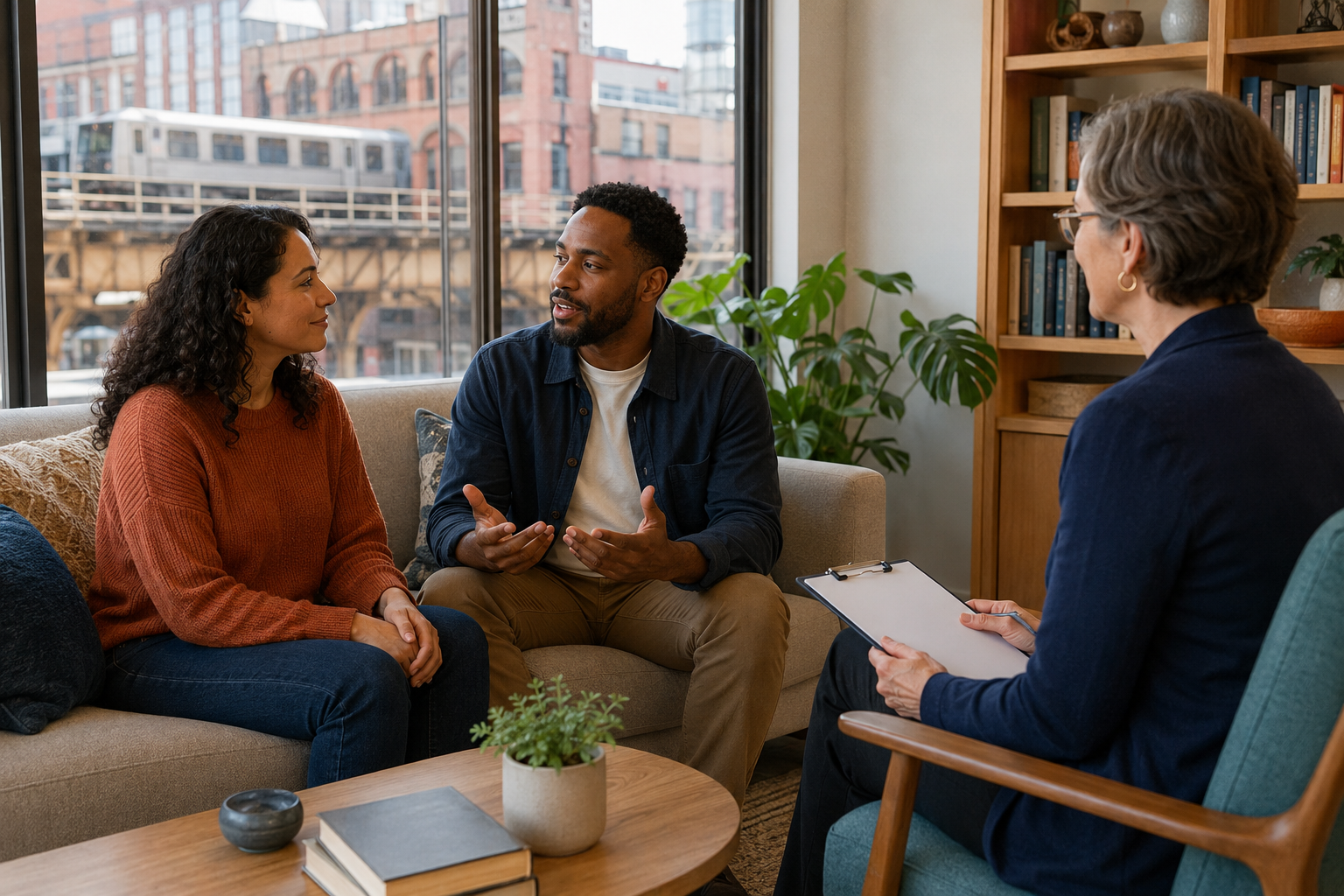
Couples counseling helping partners improve communication and strengthen their relationship in Chicago

Couples counseling can help many partners improve the way they communicate, manage conflict, and connect emotionally. However, therapy cannot guarantee that a relationship will survive.

The word “save” can make counseling sound as though there is only one successful outcome: staying together. Real relationships are more complicated.

For some couples, therapy may help rebuild trust and create a healthier relationship. For others, counseling may help them understand why the relationship has become painful and make a more informed decision about what comes next.

Therapy is not a quick repair. It is an opportunity to examine relationship patterns, communicate with professional support, and identify what may need to change.

What Does Research Say About Couples Therapy?

Research on couples therapy is generally encouraging, although no study can predict what will happen in one specific relationship.

The original research reviewed for this article includes a 2020 meta-analysis examining 58 studies, representing 40 unique samples and 2,092 couples. The researchers reported large improvements in relationship satisfaction from before to after couple therapy, along with significant improvements in communication, emotional intimacy, and partner behaviors.

Another meta-analysis from 2019 examined Behavioral Couple Therapy and Emotionally Focused Couples Therapy. It found improvements in relationship satisfaction after treatment, with some benefits continuing at six months. The researchers also cautioned that findings should be interpreted with potential publication bias in mind.

Taken together, these findings support couples therapy as a potentially effective intervention for relationship distress. They do not mean that counseling guarantees reconciliation or produces the same results for every couple.

What Problems Can Couples Counseling Help With?

Couples seek therapy for many reasons. Some are dealing with a major rupture, while others have noticed smaller problems becoming more frequent.

Common concerns include:

  • Communication problems

  • Repeated arguments

  • Emotional distance

  • Loss of intimacy

  • Trust concerns

  • Infidelity

  • Parenting disagreements

  • Financial stress

  • Resentment

  • Major life transitions

  • Different expectations

  • Difficulty resolving conflict

A relationship also does not need to involve constant fighting for something to feel wrong.

Sometimes couples stop talking about anything meaningful. Conversations become limited to bills, schedules, children, household responsibilities, and other practical concerns. They may continue functioning well as a team while gradually feeling less connected as partners.

Counseling can create space for those emotional conversations to return.

How Does Couples Counseling Work?

Couples counseling generally provides a structured environment where both people can discuss their concerns with guidance from a therapist.

The process may begin by learning about the relationship's history, understanding current challenges, identifying strengths, and discussing what each partner hopes to accomplish.

From there, therapy can focus on the patterns keeping the couple stuck.

Identifying Relationship Patterns

Many arguments follow predictable cycles.

For example, one partner feels ignored and pushes harder for attention. The other experiences that as criticism and withdraws. The first becomes more frustrated, while the second pulls away further.

Eventually, both people feel misunderstood.

Therapy can help couples recognize that cycle instead of seeing every conflict as proof that one person is the problem.

Improving Communication

Communication involves more than choosing the right words.

Couples may work on expressing concerns without attacking, listening without immediately becoming defensive, communicating needs more clearly, asking questions instead of making assumptions, and recognizing when a conversation needs a short pause.

The goal is not to make every disagreement disappear. It is to help couples handle those disagreements without repeatedly damaging their connection.

Understanding What Is Underneath the Argument

Sometimes the subject of an argument is only part of the issue.

A disagreement about chores may involve feeling unappreciated. An argument about spending may reflect anxiety about financial security. A conflict about time together may actually be about loneliness or reassurance.

Understanding the emotional need underneath a disagreement can change the conversation significantly.

Does Couples Counseling Work If Only One Partner Is Motivated?

Ideally, both partners participate honestly and are willing to examine their own role in the relationship.

That does not mean couples always enter therapy equally motivated.

One partner may be eager to work on the relationship while the other is skeptical. Another may already be questioning whether they want to stay together.

Counseling can still provide space to clarify what each person wants and understand where their goals overlap or differ.

If one partner completely refuses couples therapy, individual therapy may still help the other person explore their own communication habits, needs, boundaries, and relationship decisions.

One person can change how they respond. They cannot force another person to change.

When Should You Start Couples Counseling?

Many couples wait until resentment and conflict have been building for years.

You do not necessarily have to wait that long.

Consider counseling if:

  • You keep having the same arguments

  • Conversations become defensive quickly

  • Important topics are being avoided

  • One or both partners feel emotionally disconnected

  • Trust has been damaged

  • Intimacy has changed

  • Resentment is growing

  • You struggle to repair after disagreements

  • You are considering separation

  • You want to strengthen the relationship before problems become more serious

Seeking support earlier can give couples more opportunity to address patterns before they become deeply established.

Can Couples Counseling Help After Infidelity?

Infidelity or another major betrayal can significantly affect trust.

The hurt partner may experience anger, grief, confusion, or difficulty feeling secure again. The person who caused the betrayal may experience guilt, shame, fear, or uncertainty about how to repair the damage.

There is rarely one conversation that resolves all of those emotions.

Couples therapy may help partners discuss the impact of what happened, establish boundaries, address accountability, improve communication, and determine what rebuilding trust would require.

However, therapy cannot guarantee reconciliation.

For some couples, counseling may support rebuilding the relationship. For others, it may provide enough clarity to recognize that continuing the relationship is not the right outcome.

What Makes Couples Counseling More Likely to Be Productive?

There is no formula for guaranteeing results, but several things can help couples engage more meaningfully in therapy.

Being Honest

Therapy becomes more useful when both partners are willing to talk about what they are actually experiencing rather than presenting the version of the relationship they think they are supposed to have.

Looking at Your Own Behavior

It is usually much easier to identify everything your partner should change.

Progress may also require asking, “What could I do differently?”

That does not mean accepting responsibility for everything. It means being willing to examine how your own reactions affect the relationship.

Practicing Outside Therapy

The relationship exists outside the therapy room.

Trying new communication strategies, following through on agreements, and practicing healthier responses between sessions can help turn what you discuss in therapy into actual relationship habits.

Having Clear Goals

One couple may want to rebuild trust. Another may want to communicate better. Another may be trying to determine whether staying together is realistic.

Being clear about what you want from therapy can help keep the process focused.

Is Couples Counseling Only for Relationships in Crisis?

No.

Couples counseling can also be proactive.

Some couples seek support because they want to communicate more effectively, strengthen emotional intimacy, adjust to becoming parents, prepare for marriage, or navigate another major life transition.

Counseling does not necessarily mean something is broken.

It can simply mean you want professional support while working on a relationship that matters to you.

Why Choose Wellman Psychology?

At Wellman Psychology, we understand that relationship concerns can feel deeply personal.

You may love your partner while feeling frustrated with the way you communicate. You may want to stay together but have no idea how to stop repeating the same arguments. You may also be unsure whether the relationship can recover at all.

Our role is not to decide what your relationship should look like.

Our couples counseling in Chicago provides a supportive environment where both partners can explore their concerns, understand relationship patterns, and work toward goals that are meaningful to them.

Therapy may focus on communication, recurring conflict, emotional distance, trust, intimacy, or major relationship changes depending on what you are experiencing.

The goal is to combine practical relationship skills with a deeper understanding of what is happening between you.

What If Couples Counseling Does Not Keep You Together?

If a couple attends therapy and eventually separates, that does not automatically mean therapy failed.

The purpose of couples counseling is not to keep every relationship together at any cost.

Sometimes therapy helps partners rebuild their relationship. Sometimes it helps them understand what needs to change. In other situations, it gives them enough clarity to make a difficult decision more thoughtfully.

The research discussed in the original article also reflects this distinction. A long-term study of seriously distressed married couples found meaningful improvements in marital satisfaction following behavioral couple therapy, while some couples still separated or divorced over the follow-up period.

Relationship improvement and staying together are connected, but they are not identical outcomes.

Frequently Asked Questions About Couples Counseling

Can couples counseling save a relationship?

Couples counseling can help many partners improve communication, emotional intimacy, relationship satisfaction, and conflict patterns. However, it cannot guarantee that every relationship will continue.

How successful is couples counseling?

Research generally supports couples therapy as an effective intervention for relationship distress, with studies reporting improvements in areas including relationship satisfaction, communication, and emotional intimacy.

How long does couples counseling take?

There is no universal timeline. Some couples need shorter-term support around a particular concern, while more complex or longstanding problems may require more time.

Does couples counseling work if one partner wants to leave?

Therapy may still help both people clarify what they want and explore possible next steps. However, counseling cannot force someone to stay in a relationship.

Can couples counseling help after cheating?

It can provide a structured place to address betrayal, accountability, trust, boundaries, communication, and the future of the relationship. Reconciliation is not guaranteed.

Is couples counseling only for couples in crisis?

No. Counseling can also help couples strengthen communication, prepare for changes, or invest proactively in an otherwise healthy relationship.

Can Couples Counseling Give Your Relationship a Better Chance?

So, can couples counseling save a relationship?

It can help, but there are no guarantees.

Research provides good reason to consider professional support when relationship problems have become difficult to resolve alone. Couples therapy can create opportunities to improve communication, understand emotional needs, address conflict, and strengthen connection.

But therapy is a collaborative process. A therapist can provide structure, guidance, and perspective. Both partners still bring their own experiences, habits, expectations, and willingness to change.

If you and your partner feel stuck in the same arguments, are struggling with trust, feel emotionally distant, or simply want to strengthen your relationship, schedule an appointment with Wellman Psychology to explore couples counseling in Chicago.

Follow Wellman Psychology for additional mental health resources and updates:
Related Articles

What Happens During Your First Couples Counseling Session?

Considering couples counseling can bring up a lot of questions. What will the therapist ask? Will you have to talk about your biggest problems immediately? What happens if you and your partner start arguing during the appointment?

Your first session is generally about helping the therapist understand your relationship, what brought you to therapy, and what you both hope will change. You do not need to arrive with everything figured out or a perfectly organized explanation of your relationship.

At Wellman Psychology, we understand that asking for support can feel like a significant step. Couples counseling in Chicago can give you and your partner a structured space to slow down, better understand what is happening between you, and begin working toward healthier ways of communicating and connecting.

What Happens During Your First Couples Counseling Session?

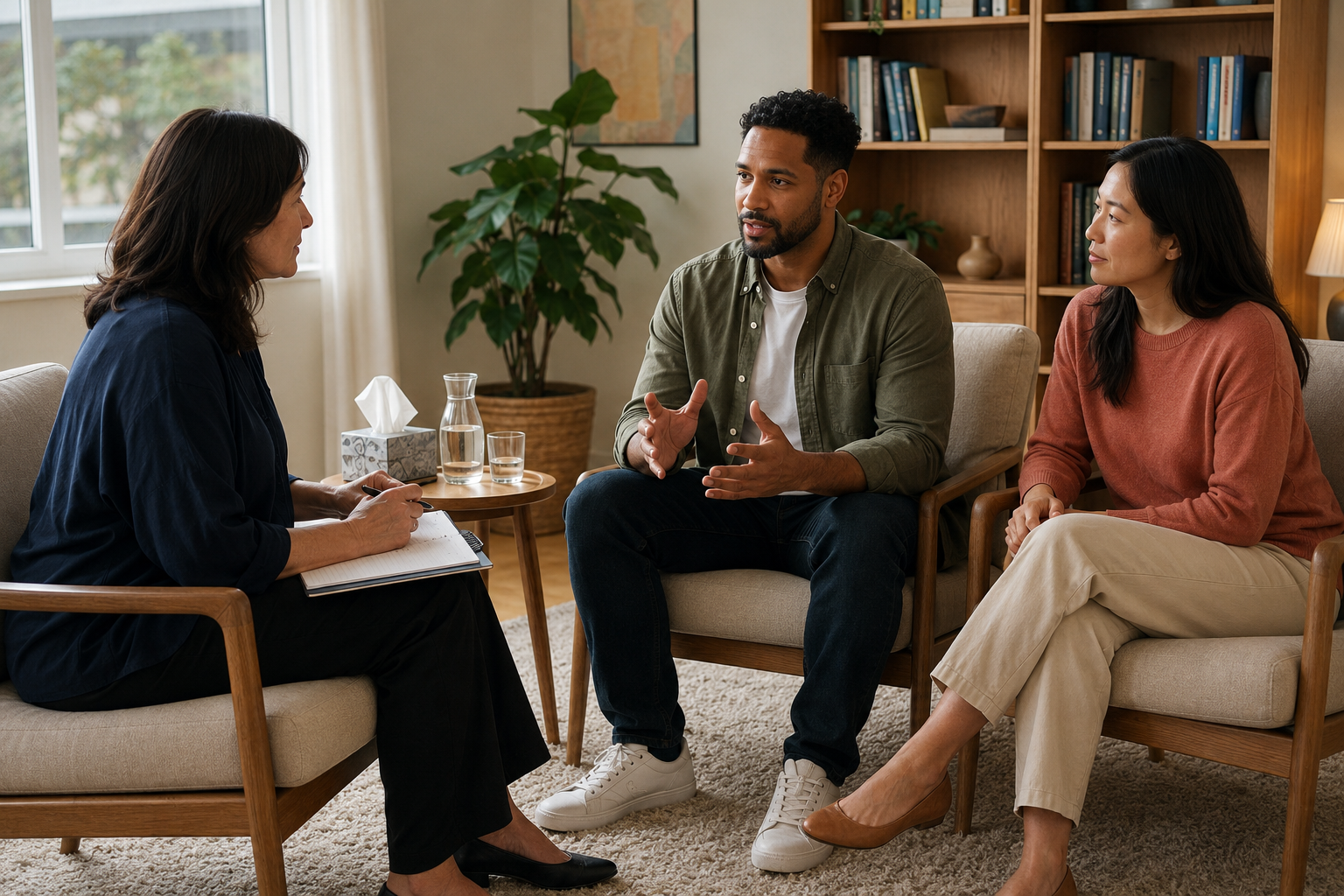
First couples counseling session with a therapist and couple

The first appointment typically begins with your therapist getting to know you as a couple. They may ask how long you have been together, what brought you to counseling now, what has been difficult recently, and what you each hope to accomplish.

Both partners should have an opportunity to explain their perspective. Your answers may be different, and that is okay. One person might say, “I want us to stop arguing,” while the other says, “I want us to feel close again.” Those answers may sound different, but they can both help the therapist understand what is happening in the relationship.

You may also talk about what is working well. Understanding your strengths as a couple can be just as useful as identifying areas that need attention.

By the end of the first session, your therapist may begin identifying initial goals, such as improving communication, managing recurring conflict, rebuilding trust, strengthening emotional intimacy, or navigating a major life transition.

You are not expected to solve everything in one appointment. The first session is a starting point.

What Questions Will a Couples Therapist Ask?

Your therapist will likely ask questions about both your relationship history and your current concerns.

Examples may include:

  • What brought you to counseling now?

  • What are the biggest challenges in your relationship?

  • What do you appreciate about each other?

  • How do disagreements usually begin?

  • What happens when one of you becomes upset?

  • How do you normally resolve conflict?

  • What have you already tried?

  • What would you like to be different?

  • What do you hope to accomplish through counseling?

The therapist may also pay attention to how you communicate during the session. Perhaps one person becomes quiet when conflict comes up while the other becomes increasingly persistent. Maybe one partner wants to resolve everything immediately while the other needs time to process.

Recognizing patterns like these can help your therapist understand not just what you argue about, but how conflict develops between you.

Will the Therapist Take Sides?

This is one of the most common concerns couples have before starting therapy.

Couples counseling is generally not about deciding which partner is right or wrong. Instead, the therapist tries to understand the relationship dynamic and how each person's reactions may affect the other.

For example, one partner may push for a conversation because they feel ignored. The other may withdraw because they feel criticized. The withdrawal then makes the first person feel even more ignored, so they push harder.

Therapy can help make that cycle visible.

This does not mean every action in a relationship is treated as equally acceptable. Concerns involving abuse, coercion, or safety require appropriate clinical attention. For typical relationship conflict, however, the focus is usually on understanding patterns and developing healthier ways to respond.

What If You Start Arguing During the Session?

Arguing in front of a therapist may feel embarrassing, but it can sometimes provide useful information.

If a disagreement begins during therapy, your therapist may help slow the interaction down rather than simply allowing the argument to continue.

They might ask what each person was feeling, what they needed in that moment, what caused the conversation to escalate, and how each response affected the other person.

This can help you recognize the cycle underneath the disagreement.

The goal of couples counseling is not to eliminate every argument. Healthy relationships still involve disagreement. Instead, therapy can help you develop better ways of navigating those moments without repeatedly getting trapped in the same pattern.

How Should You Prepare for Your First Couples Counseling Session?

You do not need to spend hours preparing. A few minutes of reflection can be enough.

Before your appointment, consider:

Why Are We Seeking Counseling?

Try to identify the main concerns that brought you to therapy. You may have several, but understanding the biggest ones can make it easier to explain what you need.

What Would I Like to Change?

Think beyond what you want your partner to do differently. Consider what you would like to change about the relationship itself and what you may personally be able to contribute.

What Is Already Working?

It is easy to focus entirely on problems. Think about the strengths in your relationship, what originally brought you together, and what you still value about your partner.

What Have We Already Tried?

Maybe you have tried weekly check-ins, spending more time together, taking breaks during arguments, or avoiding a particular topic altogether. Letting your therapist know what has and has not helped provides useful context.

What Should You Avoid Before Your First Session?

Try not to approach couples therapy like a court case.

You do not need to prepare a list of every mistake your partner has made or collect examples to prove that you are right. Entering the session focused entirely on convincing the therapist that your partner is the problem can make it harder to explore the relationship itself.

A more useful question may be:

“What keeps happening between us, and what could we both do differently?”

That does not mean accepting blame for everything. It means approaching therapy with enough curiosity to understand the patterns affecting your relationship.

What Happens After the First Couples Counseling Session?

Once your therapist understands your relationship more clearly, later sessions typically become more focused on your goals.

Depending on what brings you to therapy, you may work on:

  • Communication

  • Conflict resolution

  • Emotional intimacy

  • Trust

  • Boundaries

  • Relationship expectations

  • Family or parenting concerns

  • Major life transitions

  • Recurring disagreements

  • Intimacy and connection

Your therapist may also introduce exercises or communication strategies to practice between appointments.

The goal is not simply to spend an hour each week talking about what went wrong. Couples counseling can also help you practice new ways of responding to one another and gradually change patterns that have become difficult to manage.

How Many Couples Counseling Sessions Will You Need?

There is no universal number of sessions.

Some couples seek short-term support for one specific concern, while others benefit from longer-term therapy when the issues are more complex or have developed over many years.

The length of therapy may depend on your goals, the concerns being addressed, how long those patterns have existed, and how the therapeutic process progresses.

Your goals can also evolve. You may initially come in because of frequent arguments and later realize that emotional distance or difficulty expressing your needs is a larger part of the problem.

Therapy can adjust as your understanding of the relationship changes.

What If Your Partner Does Not Want Couples Counseling?

You cannot force another person to participate meaningfully in therapy.

If your partner is hesitant, it may help to explain why counseling matters to you without presenting it as punishment.

Instead of saying, “You need therapy,” you might explain that you want support understanding why the same problems keep happening and would like to work on the relationship together.

If your partner still does not want to participate, individual therapy can give you space to understand your own emotions, needs, boundaries, and communication patterns.

Why Choose Wellman Psychology?

At Wellman Psychology, we recognize that no two relationships are exactly alike.

Some couples seek support because communication has become difficult. Others are trying to rebuild trust, reconnect emotionally, navigate a major transition, or understand why the same arguments keep happening.

Others simply want to strengthen a relationship that is already important to them.

Our approach to couples counseling focuses on creating a space where both partners can participate honestly and where therapy is shaped around the relationship's specific needs and goals.

If you are considering couples counseling in Chicago, your first appointment does not require you to have the right answers. It is simply an opportunity to begin explaining what is happening and determine what kind of support may be useful.

Frequently Asked Questions About Your First Couples Counseling Session

What should I say in my first couples therapy session?

Start by explaining why you decided to seek counseling, what has been difficult, and what you would like to improve. You do not need to explain your entire relationship perfectly.

Will a couples therapist tell us who is right?

Generally, no. Couples therapy focuses on understanding both perspectives and the patterns affecting the relationship rather than choosing a winner.

Can couples counseling help if we argue a lot?

Yes. Therapy can help couples understand recurring conflict patterns and practice healthier ways of communicating and responding to each other.

How long does couples counseling take?

There is no fixed timeline. The length of therapy depends on your concerns, goals, progress, and therapeutic approach.

Is it normal to feel nervous before couples counseling?

Yes. Talking about personal relationship concerns with someone new can feel uncomfortable. You are not expected to know exactly what to say before arriving.

Your First Session Is a Starting Point

Walking into a couples counseling appointment does not mean your relationship has failed.

You do not need to solve every problem before your first session, agree about exactly what is wrong, or know what therapy should ultimately accomplish. You simply need to be willing to begin the conversation.

At Wellman Psychology, we believe that meaningful relationship change can start by giving both people the space to feel heard and better understand what is happening between them.

If you and your partner are ready to explore what that could look like, schedule an appointment with Wellman Psychology to learn more about couples counseling in Chicago.

Follow Wellman Psychology for additional mental health resources and updates:

Related Articles

7 Signs It May Be Time to Consider Couples Counseling in Chicago

Have you and your partner been having the same argument over and over without anything really changing? Maybe communication has become harder, you feel less connected than you used to, or small frustrations keep turning into bigger conflicts.

These experiences do not automatically mean something is seriously wrong with your relationship. Even strong couples can get stuck in patterns that become difficult to change on their own.

Couples counseling in Chicago can provide a structured space to understand what is happening, communicate more effectively, and work toward healthier ways of relating to one another.

At Wellman Psychology, we believe you do not need to wait until your relationship reaches a breaking point before asking for support. Recognizing patterns early can give you and your partner more opportunities to address them before resentment or emotional distance grows.

What Is Couples Counseling?

Couples counseling session with a therapist in Chicago

Couples counseling is a form of therapy that helps partners address relationship concerns, improve communication, manage conflict, and better understand recurring patterns.

The therapist is not there to decide which person is right.

Instead, therapy looks at what happens between you.

For example, one partner may bring up a concern because they want reassurance. The other may hear criticism and become defensive. The first person becomes more frustrated, the second withdraws further, and suddenly you are having the same argument again.

Couples counseling can help slow that cycle down so both partners can understand what is happening underneath the conflict and begin responding differently.

It can also be useful for couples who are not in crisis but want to improve communication, strengthen emotional intimacy, or prepare for an important transition together.

7 Signs It May Be Time to Consider Couples Counseling

There is no single point when every couple should start therapy. However, some patterns may signal that additional support could be helpful.

1. You Keep Having the Same Arguments

Do you keep returning to the same disagreements even after promising each other that things will be different next time?

The topic may be money, chores, parenting, family boundaries, intimacy, or work. But sometimes the subject of the argument is not the real issue.

A disagreement about household responsibilities may actually be about feeling unappreciated. An argument about spending may reflect concerns about trust or security.

When the same conflict keeps returning, you may be dealing with a deeper relationship pattern rather than a single disagreement.

Couples counseling can help you identify that pattern and understand what each person may actually be reacting to.

The goal is not to eliminate disagreement. Healthy couples can disagree. The goal is to find ways to work through those disagreements without repeatedly becoming trapped in the same painful cycle.

2. Communication Has Become Difficult

Communication problems are one of the most common reasons couples seek therapy.

You may notice that:

  • Conversations quickly become arguments

  • One partner regularly shuts down

  • You interrupt or talk over each other

  • Certain subjects are avoided entirely

  • You feel like your partner does not listen

  • You struggle to explain what you need

  • Important conversations happen by text because speaking feels too difficult

Communicating better involves more than simply talking more often.

It also means learning how to listen, express concerns clearly, manage emotional reactions, and respond without immediately becoming defensive.

A therapist can help you practice these skills in a setting where difficult conversations can be slowed down and approached differently.

3. You Feel Emotionally Disconnected

Sometimes emotional distance develops gradually.

You may still live together, share responsibilities, raise children, and function well as a household, but the relationship begins to feel more practical than emotional.

Most conversations may revolve around work, bills, schedules, errands, or responsibilities.

You might notice less affection, less quality time, fewer meaningful conversations, or a growing sense that you feel more like roommates than partners.

Emotional disconnection does not necessarily mean the relationship is over.

Life can simply become overwhelming. Work, parenting, financial pressure, health concerns, and other responsibilities can leave very little energy for the relationship itself.

Couples counseling can create intentional space to understand how that distance developed and what each partner may need to feel connected again.

4. Trust Has Been Damaged

Trust can be affected by infidelity, dishonesty, broken promises, financial secrecy, or repeated disappointments.

Rebuilding it usually requires more than an apology.

The partner who was hurt may need time, consistency, accountability, and honest communication before they feel secure again. Meanwhile, both people may have very different ideas about what moving forward should look like.

Therapy can provide a structured environment to discuss what happened and its impact on the relationship.

Couples counseling cannot guarantee that trust will be completely restored or that every relationship will continue. What it can do is help both partners communicate about the damage, understand what would need to change, and consider what they want moving forward.

5. Resentment Is Building

Resentment often develops after frustrations have gone unresolved for a long time.

You may find yourself keeping track of everything you contribute while becoming increasingly aware of what your partner does not do.

Thoughts such as “I always have to handle everything” or “They never listen to me” can start shaping how you interpret even small situations.

Then one forgotten responsibility triggers an argument about months or years of frustration.

Couples counseling can help you look beneath the current disagreement and identify the larger hurt attached to it.

That gives both partners an opportunity to communicate what has been building up before resentment creates even more emotional distance.

6. You Avoid Difficult Conversations

Avoiding a difficult conversation can feel easier than having another argument.

If talking about money always becomes a fight, you may stop discussing finances. If conversations about intimacy feel uncomfortable, you may avoid them. If talking about the future creates tension, you may change the subject.

Avoidance can reduce conflict temporarily, but the underlying issue remains.

Important conversations couples may struggle to have include:

  • Finances

  • Sex and intimacy

  • Parenting

  • Marriage

  • Whether to have children

  • Family boundaries

  • Career decisions

  • Major life changes

  • Expectations for the future

A therapist can help create enough structure for both people to discuss these subjects without the conversation immediately becoming overwhelming.

7. You Are Wondering Whether Your Relationship Can Improve

Sometimes the sign is simply a question that keeps coming back:

“Can things actually get better?”

Maybe you miss how close you used to feel. Maybe you wonder whether the relationship will always feel this difficult. Or perhaps you are not thinking about separation at all and simply know that you do not want things to continue exactly as they are.

That question does not necessarily mean your relationship is failing.

It may simply mean you recognize that something needs attention.

Couples counseling in Chicago can give you and your partner a place to explore what is happening without requiring either of you to arrive with all the answers.

Sometimes therapy begins by helping you understand what you actually want to change.

Do You Have to Be in Crisis to Start Couples Counseling?

No.

Couples counseling does not have to be the last thing you try before ending a relationship.

Some couples seek therapy while things are generally going well because they want to strengthen their relationship before a major transition.

You might consider counseling when you are:

  • Preparing for marriage

  • Moving in together

  • Becoming parents

  • Adjusting to a major life change

  • Experiencing increased stress

  • Trying to improve communication

  • Working on emotional intimacy

  • Navigating different expectations for the future

Seeking support earlier can sometimes make it easier to address concerns before frustration and resentment become deeply established.

What Happens During Couples Counseling?

During your first session, your therapist will generally want to understand your relationship, what brought you to therapy, and what each person hopes to accomplish.

You may discuss:

  • Your current concerns

  • How long you have been together

  • Important relationship history

  • How each partner views the problem

  • Previous attempts to resolve it

  • Communication patterns

  • Your goals for therapy

Both partners should have an opportunity to explain their perspective.

As therapy continues, sessions may include guided conversations, communication strategies, conflict-resolution skills, discussions about trust, and identifying recurring patterns.

There is no single formula that works for every relationship. The process should reflect the couple, the concerns being addressed, and the goals you establish together.

How Do You Know if Couples Counseling Is Right for You?

You do not need to relate to all seven signs.

Even one or two persistent concerns may be enough to consider speaking with a professional.

Ask yourself:

  • Are we repeating the same arguments?

  • Do conversations quickly become defensive?

  • Do I feel emotionally distant from my partner?

  • Has something damaged our trust?

  • Am I carrying resentment?

  • Are we avoiding important conversations?

  • Do I keep wondering whether our relationship can improve?

If several of these questions feel familiar, counseling may be worth considering.

How you bring up therapy with your partner can matter too. Framing it as “I want us to get some support” rather than “You need therapy” can make the conversation feel less like criticism and more like an investment in the relationship.

Why Choose Wellman Psychology for Couples Counseling?

At Wellman Psychology, we understand that talking about relationship problems with someone you have never met can feel vulnerable.

You may worry that the therapist will take your partner's side or that bringing up difficult issues will somehow make them worse.

Our goal is to create a respectful environment where both partners can be heard and where the focus remains on understanding the relationship rather than assigning blame.

Every couple arrives with a different story.

Some are struggling with constant arguments. Others feel emotionally disconnected. Some are rebuilding trust, while others simply want to communicate better and create a stronger foundation for the future.

Your therapy should reflect those differences.

Our approach to couples counseling focuses on understanding the patterns affecting your relationship and helping both partners explore practical, meaningful ways to move forward.

You do not need to have everything figured out before your first appointment. Questions, uncertainty, frustration, and simply knowing that something needs to change are enough reasons to begin the conversation.

Frequently Asked Questions About Couples Counseling

How do I know if my partner and I need couples counseling?

Recurring arguments, communication problems, emotional distance, damaged trust, resentment, and avoiding important conversations may all be reasons to consider counseling. You do not need to experience every sign before reaching out.

Does couples counseling work if only one partner wants to go?

Couples therapy generally involves both partners, but one person can still seek individual therapy if their partner is not ready. Individual therapy may help you better understand your emotions, communication patterns, boundaries, and relationship goals.

How long does couples counseling take?

There is no set number of sessions for every couple. The length of therapy depends on your concerns, goals, progress, and the therapist's clinical approach.

Can couples counseling help after infidelity?

Yes. Counseling can provide a structured setting to discuss the impact of infidelity, accountability, trust, and possible next steps. It cannot guarantee reconciliation, but it can help couples explore what moving forward may require.

Is couples counseling only for married couples?

No. Couples counseling may be appropriate for dating couples, engaged partners, unmarried couples, married couples, and people in other committed relationships.

You Do Not Have to Wait Until Things Get Worse

Relationships naturally go through difficult periods.

Work, family, parenting, finances, changing responsibilities, and personal stress can all affect how two people communicate and connect.

What matters is not whether you ever disagree. It is how those disagreements are handled and whether you are able to repair the relationship afterward.

If you recognize several of these signs, it does not mean your relationship is destined to remain stuck.

Getting support can simply mean the relationship matters enough to work on it.

If you and your partner are experiencing recurring conflict, communication difficulties, emotional distance, or another concern, schedule an appointment with Wellman Psychology to learn more about couples counseling in Chicago and whether it may be the right next step for your relationship.

Follow Wellman Psychology for additional mental health resources and updates:

Related Articles