

When a relationship feels stuck, it is natural to wonder whether couples counseling can actually make a difference.
Research suggests that couples therapy can improve relationship satisfaction, communication, emotional intimacy, and relationship functioning for many couples. It cannot guarantee that every relationship will stay together, but it can give partners professional guidance and a structured place to understand what is happening and decide what they want to do next.
At Wellman Psychology, we believe couples do not have to wait until their relationship reaches a breaking point before seeking support. Couples counseling in Chicago can help partners address recurring arguments, communication difficulties, emotional distance, trust concerns, and other patterns that have become difficult to change on their own.
Can Couples Counseling Actually Save a Relationship?
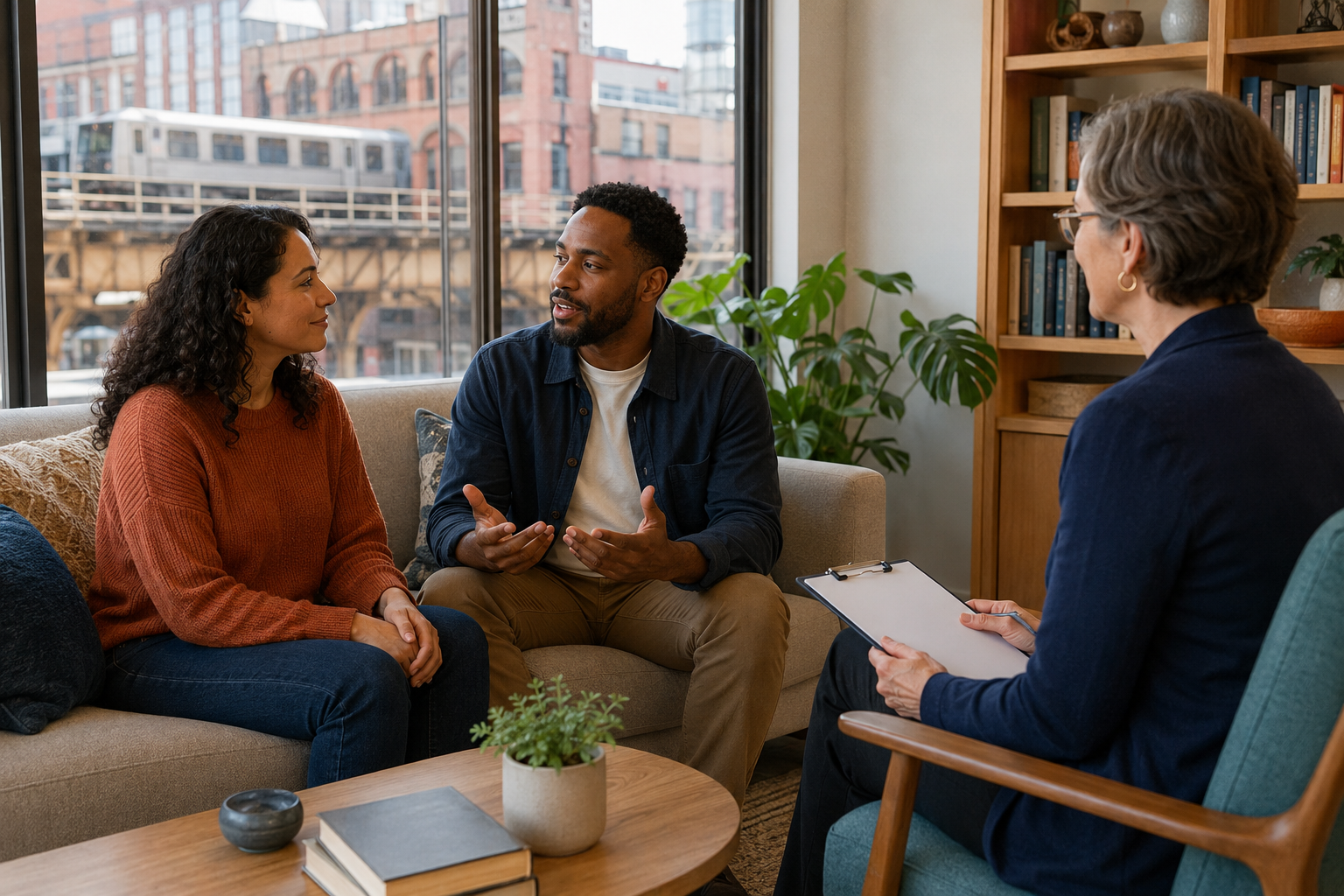
Couples counseling can help many partners improve the way they communicate, manage conflict, and connect emotionally. However, therapy cannot guarantee that a relationship will survive.
The word “save” can make counseling sound as though there is only one successful outcome: staying together. Real relationships are more complicated.
For some couples, therapy may help rebuild trust and create a healthier relationship. For others, counseling may help them understand why the relationship has become painful and make a more informed decision about what comes next.
Therapy is not a quick repair. It is an opportunity to examine relationship patterns, communicate with professional support, and identify what may need to change.
What Does Research Say About Couples Therapy?
Research on couples therapy is generally encouraging, although no study can predict what will happen in one specific relationship.
The original research reviewed for this article includes a 2020 meta-analysis examining 58 studies, representing 40 unique samples and 2,092 couples. The researchers reported large improvements in relationship satisfaction from before to after couple therapy, along with significant improvements in communication, emotional intimacy, and partner behaviors.
Another meta-analysis from 2019 examined Behavioral Couple Therapy and Emotionally Focused Couples Therapy. It found improvements in relationship satisfaction after treatment, with some benefits continuing at six months. The researchers also cautioned that findings should be interpreted with potential publication bias in mind.
Taken together, these findings support couples therapy as a potentially effective intervention for relationship distress. They do not mean that counseling guarantees reconciliation or produces the same results for every couple.
What Problems Can Couples Counseling Help With?
Couples seek therapy for many reasons. Some are dealing with a major rupture, while others have noticed smaller problems becoming more frequent.
Common concerns include:
Communication problems
Repeated arguments
Emotional distance
Loss of intimacy
Trust concerns
Infidelity
Parenting disagreements
Financial stress
Resentment
Major life transitions
Different expectations
Difficulty resolving conflict
A relationship also does not need to involve constant fighting for something to feel wrong.
Sometimes couples stop talking about anything meaningful. Conversations become limited to bills, schedules, children, household responsibilities, and other practical concerns. They may continue functioning well as a team while gradually feeling less connected as partners.
Counseling can create space for those emotional conversations to return.
How Does Couples Counseling Work?
Couples counseling generally provides a structured environment where both people can discuss their concerns with guidance from a therapist.
The process may begin by learning about the relationship's history, understanding current challenges, identifying strengths, and discussing what each partner hopes to accomplish.
From there, therapy can focus on the patterns keeping the couple stuck.
Identifying Relationship Patterns
Many arguments follow predictable cycles.
For example, one partner feels ignored and pushes harder for attention. The other experiences that as criticism and withdraws. The first becomes more frustrated, while the second pulls away further.
Eventually, both people feel misunderstood.
Therapy can help couples recognize that cycle instead of seeing every conflict as proof that one person is the problem.
Improving Communication
Communication involves more than choosing the right words.
Couples may work on expressing concerns without attacking, listening without immediately becoming defensive, communicating needs more clearly, asking questions instead of making assumptions, and recognizing when a conversation needs a short pause.
The goal is not to make every disagreement disappear. It is to help couples handle those disagreements without repeatedly damaging their connection.
Understanding What Is Underneath the Argument
Sometimes the subject of an argument is only part of the issue.
A disagreement about chores may involve feeling unappreciated. An argument about spending may reflect anxiety about financial security. A conflict about time together may actually be about loneliness or reassurance.
Understanding the emotional need underneath a disagreement can change the conversation significantly.
Does Couples Counseling Work If Only One Partner Is Motivated?
Ideally, both partners participate honestly and are willing to examine their own role in the relationship.
That does not mean couples always enter therapy equally motivated.
One partner may be eager to work on the relationship while the other is skeptical. Another may already be questioning whether they want to stay together.
Counseling can still provide space to clarify what each person wants and understand where their goals overlap or differ.
If one partner completely refuses couples therapy, individual therapy may still help the other person explore their own communication habits, needs, boundaries, and relationship decisions.
One person can change how they respond. They cannot force another person to change.
When Should You Start Couples Counseling?
Many couples wait until resentment and conflict have been building for years.
You do not necessarily have to wait that long.
Consider counseling if:
You keep having the same arguments
Conversations become defensive quickly
Important topics are being avoided
One or both partners feel emotionally disconnected
Trust has been damaged
Intimacy has changed
Resentment is growing
You struggle to repair after disagreements
You are considering separation
You want to strengthen the relationship before problems become more serious
Seeking support earlier can give couples more opportunity to address patterns before they become deeply established.
Can Couples Counseling Help After Infidelity?
Infidelity or another major betrayal can significantly affect trust.
The hurt partner may experience anger, grief, confusion, or difficulty feeling secure again. The person who caused the betrayal may experience guilt, shame, fear, or uncertainty about how to repair the damage.
There is rarely one conversation that resolves all of those emotions.
Couples therapy may help partners discuss the impact of what happened, establish boundaries, address accountability, improve communication, and determine what rebuilding trust would require.
However, therapy cannot guarantee reconciliation.
For some couples, counseling may support rebuilding the relationship. For others, it may provide enough clarity to recognize that continuing the relationship is not the right outcome.
What Makes Couples Counseling More Likely to Be Productive?
There is no formula for guaranteeing results, but several things can help couples engage more meaningfully in therapy.
Being Honest
Therapy becomes more useful when both partners are willing to talk about what they are actually experiencing rather than presenting the version of the relationship they think they are supposed to have.
Looking at Your Own Behavior
It is usually much easier to identify everything your partner should change.
Progress may also require asking, “What could I do differently?”
That does not mean accepting responsibility for everything. It means being willing to examine how your own reactions affect the relationship.
Practicing Outside Therapy
The relationship exists outside the therapy room.
Trying new communication strategies, following through on agreements, and practicing healthier responses between sessions can help turn what you discuss in therapy into actual relationship habits.
Having Clear Goals
One couple may want to rebuild trust. Another may want to communicate better. Another may be trying to determine whether staying together is realistic.
Being clear about what you want from therapy can help keep the process focused.
Is Couples Counseling Only for Relationships in Crisis?
No.
Couples counseling can also be proactive.
Some couples seek support because they want to communicate more effectively, strengthen emotional intimacy, adjust to becoming parents, prepare for marriage, or navigate another major life transition.
Counseling does not necessarily mean something is broken.
It can simply mean you want professional support while working on a relationship that matters to you.
Why Choose Wellman Psychology?
At Wellman Psychology, we understand that relationship concerns can feel deeply personal.
You may love your partner while feeling frustrated with the way you communicate. You may want to stay together but have no idea how to stop repeating the same arguments. You may also be unsure whether the relationship can recover at all.
Our role is not to decide what your relationship should look like.
Our couples counseling in Chicago provides a supportive environment where both partners can explore their concerns, understand relationship patterns, and work toward goals that are meaningful to them.
Therapy may focus on communication, recurring conflict, emotional distance, trust, intimacy, or major relationship changes depending on what you are experiencing.
The goal is to combine practical relationship skills with a deeper understanding of what is happening between you.
What If Couples Counseling Does Not Keep You Together?
If a couple attends therapy and eventually separates, that does not automatically mean therapy failed.
The purpose of couples counseling is not to keep every relationship together at any cost.
Sometimes therapy helps partners rebuild their relationship. Sometimes it helps them understand what needs to change. In other situations, it gives them enough clarity to make a difficult decision more thoughtfully.
The research discussed in the original article also reflects this distinction. A long-term study of seriously distressed married couples found meaningful improvements in marital satisfaction following behavioral couple therapy, while some couples still separated or divorced over the follow-up period.
Relationship improvement and staying together are connected, but they are not identical outcomes.
Frequently Asked Questions About Couples Counseling
Can couples counseling save a relationship?
Couples counseling can help many partners improve communication, emotional intimacy, relationship satisfaction, and conflict patterns. However, it cannot guarantee that every relationship will continue.
How successful is couples counseling?
Research generally supports couples therapy as an effective intervention for relationship distress, with studies reporting improvements in areas including relationship satisfaction, communication, and emotional intimacy.
How long does couples counseling take?
There is no universal timeline. Some couples need shorter-term support around a particular concern, while more complex or longstanding problems may require more time.
Does couples counseling work if one partner wants to leave?
Therapy may still help both people clarify what they want and explore possible next steps. However, counseling cannot force someone to stay in a relationship.
Can couples counseling help after cheating?
It can provide a structured place to address betrayal, accountability, trust, boundaries, communication, and the future of the relationship. Reconciliation is not guaranteed.
Is couples counseling only for couples in crisis?
No. Counseling can also help couples strengthen communication, prepare for changes, or invest proactively in an otherwise healthy relationship.
Can Couples Counseling Give Your Relationship a Better Chance?
So, can couples counseling save a relationship?
It can help, but there are no guarantees.
Research provides good reason to consider professional support when relationship problems have become difficult to resolve alone. Couples therapy can create opportunities to improve communication, understand emotional needs, address conflict, and strengthen connection.
But therapy is a collaborative process. A therapist can provide structure, guidance, and perspective. Both partners still bring their own experiences, habits, expectations, and willingness to change.
If you and your partner feel stuck in the same arguments, are struggling with trust, feel emotionally distant, or simply want to strengthen your relationship, schedule an appointment with Wellman Psychology to explore couples counseling in Chicago.
Follow Wellman Psychology for additional mental health resources and updates: