

Can a Family Doctor Prescribe ADHD Medication

Can a Family Doctor Prescribe ADHD Medication? Here’s What You Should Know

If you or your child has been struggling with symptoms like inattention, impulsivity, or difficulty staying organized, you might be wondering whether it’s time to seek professional help. One common question people ask early in this process is, Can a family doctor prescribe ADHD medication?

The short answer is yes, a family doctor (also known as a primary care physician) can often diagnose ADHD and prescribe medication for it, particularly in straightforward cases. However, in more complex situations, they may refer you to a specialist such as a psychiatrist, neurologist, or psychologist for further assessment and long-term management.

Understanding who can prescribe ADHD medication, how the process works, and what to expect from treatment can make the journey much smoother. Let’s explore everything you need to know.

What Is ADHD?

Can a Family Doctor Prescribe ADHD Medication

Attention-Deficit/Hyperactivity Disorder (ADHD) is a neurodevelopmental condition that affects both children and adults. It’s characterized by persistent patterns of inattention, hyperactivity, or impulsivity that interfere with daily life, relationships, and productivity.

While ADHD is often diagnosed in childhood, many people reach adulthood without ever being assessed, only realizing later that lifelong challenges with focus or time management may have an underlying cause.

Common symptoms include:

  • Difficulty focusing or finishing tasks

  • Trouble organizing or prioritizing responsibilities

  • Forgetfulness and distractibility

  • Restlessness or constant movement

  • Impulsive decisions or interrupting others

Fortunately, ADHD is treatable. With the right combination of behavioral therapy, lifestyle adjustments, and medication, many individuals can significantly improve their quality of life.

Can a Family Doctor Prescribe ADHD Medication?

Yes, in most cases, your family doctor can prescribe ADHD medication after conducting a proper evaluation. Family doctors are trained to identify common mental health conditions, including ADHD, and can initiate treatment with approved medications like stimulants (e.g., Adderall, Ritalin, Vyvanse) or non-stimulants (e.g., Strattera, Guanfacine).

However, there are a few factors that determine whether your doctor will prescribe medication directly or refer you to a specialist:

  1. Age and Complexity of Symptoms:

    • For children, a pediatrician or child psychiatrist may be involved to ensure accurate diagnosis and safe dosing.

    • For adults with mild or moderate ADHD, a family doctor can usually handle both diagnosis and prescriptions.

  2. Coexisting Conditions:

    • If you also experience anxiety, depression, or other mental health issues, your doctor might refer you to a psychiatrist who can manage multiple medications safely.

  3. Medication Type:

    • Some stimulant medications are classified as controlled substances, meaning doctors must follow specific guidelines for prescribing and monitoring their use.

In short, while your family doctor can prescribe ADHD medication, the decision depends on your personal situation, the doctor’s comfort level, and your treatment needs.

What Is the Process of Getting an ADHD Prescription?

If you’re considering seeking medication for ADHD, here’s what you can typically expect from the process with your family doctor:

1. Initial Consultation

Your first appointment will likely include a detailed discussion of your symptoms, daily challenges, and medical history. The doctor may ask questions about your concentration, energy levels, impulsivity, and mood.

You might also fill out standardized ADHD assessment questionnaires, and if you’re a parent, teachers may be asked to complete similar forms about your child’s behavior in school.

2. Diagnosis and Evaluation

After reviewing your responses, your doctor will determine whether you meet the diagnostic criteria for ADHD. They may also perform a physical exam or blood test to rule out other causes of attention or mood changes, such as thyroid issues or sleep disorders.

If the symptoms are clear and meet standard diagnostic guidelines, your family doctor may diagnose ADHD themselves. However, if the case is complex, they may refer you to a psychologist or psychiatrist for further assessment.

3. Treatment Planning

Once a diagnosis is confirmed, the doctor will discuss your treatment options. These usually include:

  • Medication: Stimulants or non-stimulants to improve focus and control impulsivity.

  • Behavioral therapy: Learning coping skills and time management strategies.

  • Lifestyle changes: Improving sleep, exercise, and nutrition to support brain function.

You’ll work together to decide whether medication is appropriate and which type might suit you best.

4. Prescription and Monitoring

If you begin medication, your doctor will start with a low dose and gradually adjust based on how your body responds. Regular follow-ups are essential, usually every few weeks initially, then less frequently once the right dosage is found.

Your doctor will monitor side effects, sleep patterns, appetite, and focus to ensure safety and effectiveness.

Types of ADHD Medications Your Family Doctor May Prescribe

ADHD medications are typically divided into two main categories: stimulants and non-stimulants.

1. Stimulant Medications

These are the most common and effective treatments for ADHD. They work by increasing dopamine and norepinephrine levels in the brain, chemicals responsible for attention and motivation.

Common stimulant medications include:

  • Adderall (amphetamine salts)

  • Ritalin (methylphenidate)

  • Vyvanse (lisdexamfetamine)

  • Concerta (extended-release methylphenidate)

Stimulants tend to act quickly and produce noticeable improvements in focus and self-control.

2. Non-Stimulant Medications

If stimulants cause unwanted side effects or aren’t effective, your doctor may prescribe a non-stimulant alternative, such as:

  • Strattera (atomoxetine)

  • Intuniv (guanfacine)

  • Kapvay (clonidine)

These medications usually take longer to show effects but may have fewer side effects, especially for people with anxiety or sleep problems.

When Should You See a Specialist Instead?

While family doctors can prescribe ADHD medication, sometimes seeing a specialist is the better choice. You may be referred to a psychiatrist, psychologist, or neurologist if:

  • Your symptoms are severe or hard to pinpoint.

  • You have multiple mental health conditions.

  • You’ve tried medication before with poor results.

  • You’re seeking a formal psychological evaluation for school or work accommodations.

A psychiatrist or psychologist can provide advanced testing, therapy, and more nuanced medication management when needed.

How Often Will You Need Follow-Ups?

ADHD treatment requires ongoing monitoring to ensure your medication remains effective and safe. After the initial prescription, most patients see their doctor:

  • Every 2–4 weeks during the first few months of treatment.

  • Every 3–6 months once symptoms are stable.

During these check-ins, your doctor will assess your focus, side effects, and overall well-being. They may adjust your dosage, switch medications, or suggest therapy to complement your treatment.

What to Discuss With Your Family Doctor

Before starting ADHD medication, it’s important to have an open and honest discussion with your doctor. Consider bringing up these points:

  • Your specific symptoms and how they affect daily life.

  • Any history of heart issues, anxiety, or substance use.

  • Whether you’ve tried therapy or other coping strategies before.

  • Concerns about side effects or dependency.

  • How medication may interact with other prescriptions you’re taking.

Your doctor’s goal is to create a personalized plan that balances effectiveness and safety.

Do You Need a Diagnosis Before Getting Medication?

Yes. You cannot be prescribed ADHD medication without an official diagnosis. This is to ensure that your symptoms truly stem from ADHD and not another condition like anxiety, depression, or sleep deprivation, which can mimic ADHD symptoms.

Your family doctor will use clinical interviews, symptom checklists, and medical history to make this determination. In some cases, they may refer you for a formal psychological assessment, especially if your symptoms are subtle or overlap with other disorders.

Can Online Doctors Prescribe ADHD Medication?

In some regions, telehealth providers and online psychiatrists can diagnose ADHD and prescribe medication, but regulations vary by country and state. Certain controlled substances, like Adderall, may require in-person evaluations before they can be prescribed.

If you’re exploring online ADHD care, make sure you’re working with licensed professionals who follow local prescription laws.

The Role of Therapy in ADHD Treatment

Medication can be highly effective, but it’s not a cure-all. Therapy and behavioral interventions are equally important parts of managing ADHD, especially for adults learning to adapt long-standing habits.

Therapeutic approaches like Cognitive Behavioral Therapy (CBT) can help you:

  • Improve focus and organization.

  • Develop coping strategies for distractions.

  • Manage frustration or impulsivity.

  • Build self-esteem and resilience.

Combining medication with therapy offers the best long-term outcomes for most people with ADHD.

Common Misconceptions About ADHD Medication

There are many myths surrounding ADHD and its treatment. Here are a few truths to clear things up:

  • Myth: ADHD medication is addictive.
    Fact: When used correctly under medical supervision, ADHD medications are safe and not addictive.

  • Myth: Only psychiatrists can prescribe ADHD medication.
    Fact: Family doctors and primary care physicians can legally prescribe and manage these medications in many cases.

  • Myth: Medication changes your personality.
    Fact: The goal is to help you function better — not to make you someone else. When properly dosed, medication enhances focus and control, not personality.

Final Thoughts

So, can a family doctor prescribe ADHD medication? Absolutely, for many people, your family doctor is the first step toward getting help. They can perform initial assessments, prescribe medication, and monitor your progress closely.

However, if your case is complex or involves other mental health challenges, your doctor may collaborate with or refer you to a specialist for more comprehensive care.

Ultimately, the most effective ADHD treatment involves a personalized plan that may include medication, therapy, and lifestyle changes. With the right support, living well with ADHD is entirely possible.

If you suspect that you or your child may have ADHD, don’t wait to get help. The right evaluation and treatment can make a world of difference.

At Wellman Psychology, our team offers cognitive behavioral learning, diagnostic assessments, and ongoing ADHD support designed to help you regain focus and balance.

Schedule an appointment today to take the first step toward better concentration, confidence, and emotional well-being.

Feel free to check out our social media links below:

Find out more articles that can help you below:

How to Facilitate a Grief Support Group

Tips for Running a Safe and Supportive Grief Group Session

Grief can feel like an isolating journey, but support groups offer a space where people can come together to share, listen, and heal. Facilitating such a group requires sensitivity, structure, and empathy. If you’ve ever wondered, How to facilitate a grief support group?” you’re not alone. Running one effectively isn’t just about organizing meetings; it’s about creating an environment where people feel safe to express their emotions and explore their healing process.

This guide will walk you through what grief support groups are, the role of the facilitator, how to prepare, and how to make sessions meaningful for participants.

What Is a Grief Support Group?

How to Facilitate a Grief Support Group

A grief support group is a gathering of individuals who are coping with loss and come together to find comfort and healing through shared experiences. Unlike one-on-one therapy, these groups thrive on collective strength. Members discover they are not alone in their struggles, and they gain perspective from others who understand their pain.

These groups can be formal, run by licensed counselors, or informal, led by community members or volunteers who have training in group facilitation. Regardless of format, the key purpose remains the same: providing a safe space where grief can be acknowledged and processed in a healthy way.

The Role of a Facilitator

Facilitators are not there to “fix” grief, but to create a supportive environment. Their responsibilities include setting ground rules, guiding discussions, and ensuring that everyone feels respected. They may introduce topics, help manage time, and step in if conversations become overwhelming or unbalanced.

A good facilitator also models empathy and active listening. They show participants that it’s okay to express difficult emotions while keeping the group focused on constructive sharing.

Preparing to Facilitate a Group

Preparation begins before the first session. Facilitators should determine the group’s format: open (allowing new members to join anytime) or closed (with the same participants for a set number of weeks). Each format has advantages. Open groups can welcome more people, while closed groups allow deeper connections among participants.

It’s also important to establish clear guidelines. Confidentiality, respect, and equal opportunity to speak should be emphasized from the start. Many facilitators hand out a simple agreement form to remind participants of these rules.

Practical details matter too. Choosing a quiet, comfortable location helps participants feel at ease. Sessions usually last 60 to 90 minutes, providing enough time for sharing without being overwhelming.

What to Talk About in a Grief Support Group?

One of the most common concerns new facilitators have is wondering what people should actually talk about in a grief support group. The truth is, there isn’t a single script to follow. Conversations in these groups should flow naturally from the experiences of the participants. That said, having guiding themes can help ensure that discussions are meaningful and supportive rather than overwhelming or scattered.

A good starting point is simply inviting members to share their stories. Talking about the person they lost, how it happened, and what life has felt like since then can be healing in itself. Some members may feel hesitant at first, but once they realize others truly understand, they often open up. Storytelling builds a sense of connection and reassures people that their emotions are normal.

Another important topic is the emotional experience of grief. Many participants find comfort in expressing feelings of sadness, anger, guilt, or even relief. Normalizing the wide range of emotions that come with grief helps people feel less isolated. Facilitators can encourage reflection by asking gentle, open-ended questions such as, “What has been the hardest part of your week?” or “What emotions surprised you most in your grieving process?”

Groups also benefit from discussing coping strategies. These conversations can be practical—like how to handle sleepless nights, what to do on significant anniversaries, or how to respond when friends don’t understand their grief. Sharing coping tools gives participants tangible support and helps them feel more in control of their healing journey.

Finally, it’s valuable to talk about hope and resilience. While grief groups are safe spaces to process pain, they can also highlight moments of growth. Members may share memories that bring comfort, small victories in daily life, or steps they’ve taken toward healing. These conversations remind everyone that, although grief changes us, life can still hold meaning and joy.

Facilitators should strike a balance between allowing free-flowing conversation and gently guiding the group toward constructive, healing-centered discussions. By focusing on stories, emotions, coping, and hope, grief support groups provide not just a safe space to mourn but also a pathway toward resilience.

Handling Challenges in Group Sessions

It’s natural for difficult moments to arise. Some participants may dominate the conversation, while others may withdraw completely. A skilled facilitator knows how to gently redirect the discussion to maintain balance.

There may also be times when emotions run high. Tears, anger, or even silence can all surface. Instead of rushing to “fix” these moments, facilitators should allow space for them. Sometimes sitting with discomfort is part of the healing process.

If a participant shows signs of complicated grief or mental health concerns that extend beyond the group’s scope, facilitators should be prepared with referral information for professional counseling.

The Healing Power of Community

At its heart, a grief support group is about connection. People often leave each session feeling lighter, supported, and less alone. Hearing others’ stories validates their own, and giving support can be just as healing as receiving it.

Facilitators play a powerful role in making this possible. With compassion, structure, and openness, they create an environment where grief doesn’t have to be faced in isolation.

Final Thoughts

Facilitating a grief support group is a meaningful way to help others through one of life’s hardest experiences. It’s not about providing all the answers, but about holding space for people to share, connect, and grow stronger together. With thoughtful preparation and empathy, facilitators can guide groups that become lifelines of healing and hope.

If you or someone you love is struggling with loss, you don’t have to go through it alone. At Wellman Psychology, our grief counselling services in Chicago, IL, provide the support you need to navigate this difficult journey. Schedule a consultation today and take the first step toward healing.

Feel free to check out our social media links below:

Find out more articles that can help you below:

When Grief Becomes Unhealthy

Unhealthy Grief: What It Looks Like and How to Get Help

Losing someone you love is one of life’s most difficult experiences. Grief is the natural response to loss, and while it can be painful, it also plays a role in helping us heal. Over time, most people gradually adapt to their “new normal.” The sharp edges of grief may soften, and memories of the person shift from overwhelming sorrow to cherished reflection.

But what happens when grief doesn’t ease with time? What if the pain stays as raw as it was in the beginning or even intensifies? This is when grief can become unhealthy or complicated. Recognizing the difference between natural grieving and unresolved, harmful grief is critical for emotional and physical well-being.

What Is Unhealthy Grief?

When Grief Becomes Unhealthy

Unhealthy grief, sometimes called complicated grief or prolonged grief disorder, is when the natural healing process stalls. While it’s normal to experience sadness, anger, guilt, and fatigue after a loss, most people begin to adjust gradually. They may still miss their loved one deeply, but they find ways to function, reconnect with life, and rediscover meaning.

With unhealthy grief, that adjustment doesn’t happen. Instead, the mourner feels stuck in a cycle of longing, pain, or avoidance. Months or even years after the loss, the grief feels just as fresh as day one. Daily life, relationships, and work may all be disrupted. Importantly, this doesn’t mean someone is “failing” at grieving; it simply signals that the loss has created wounds too deep to heal without additional support.

Signs of Unhealthy or Complicated Grief

How can you tell whether grief is following its natural course or has shifted into something more concerning? Here are common signs:

  • Persistent, intense yearning for the deceased that doesn’t lessen with time.

  • Preoccupation with the loss, replaying “what ifs” or memories on a loop.

  • Avoidance of reminders—refusing to visit familiar places, touch belongings, or talk about the person.

  • Inability to function normally—struggling at work, withdrawing from social connections, or neglecting responsibilities.

  • Unrelenting guilt or blame, whether directed inward (“I should’ve done more”) or outward (“It’s someone else’s fault”).

  • Emotional numbness—feeling disconnected from people or activities that once mattered.

  • Hopelessness or self-harm thoughts related to the loss.

While short bursts of these feelings can be normal early on, their persistence for many months or their severity can indicate unhealthy grief.

Common Unhealthy Coping Mechanisms

When grief feels unbearable, it’s natural to want relief. But sometimes the coping strategies people turn to cause more harm than good:

  • Substance use: Alcohol, drugs, or even prescription misuse may numb emotions temporarily, but often deepen depression and isolation.

  • Overworking: Throwing oneself into work to avoid emotions may delay healing, leading to burnout.

  • Social withdrawal: Avoiding family or friends might feel protective, but it often worsens loneliness.

  • Risk-taking behaviors: Reckless driving, overspending, or unsafe habits can serve as distractions but create additional stress and danger.

These patterns provide short-term distraction but prevent genuine healing.

Normal Grief vs. Unhealthy Grief

It helps to see the differences side by side.

Normal Grief

Unhealthy / Complicated Grief

Intense emotions early on that gradually soften with time

Intensity of emotions remains constant or worsens over time

A person is able to function (work, relationships) even if with difficulty

Daily functioning is severely impaired or impossible

Can think of the loved one with both sadness and fondness as months pass

Focus remains almost exclusively on the pain of the loss

Acceptance and adaptation occur over time

Feeling “stuck” in grief with little progress toward healing

This table highlights why recognizing unhealthy grief is so important it signals when extra support is necessary.

When Does Grief Become a Disorder?

In 2022, the American Psychiatric Association (APA) added Prolonged Grief Disorder to its diagnostic manual. This condition describes grief lasting more than 12 months (or six months for children) that causes significant disruption to life.

That doesn’t mean grief has an “expiration date.” Everyone heals at a different pace. But when grief prevents you from returning to daily routines, enjoying life, or feeling connected to others, it may meet the threshold for clinical intervention.

The Health Impact of Unresolved Grief

Unhealthy grief isn’t just emotional; it also takes a physical toll. Studies show prolonged grief can trigger:

  • Cardiovascular strain: Higher risk of high blood pressure, irregular heartbeat, and even heart disease.

  • Weakened immune system: Making you more vulnerable to colds, infections, and slower recovery.

  • Digestive issues: Stomach aches, nausea, or changes in appetite.

  • Sleep disturbances: Insomnia, frequent waking, or nightmares.

  • Chronic stress responses: Increased cortisol (stress hormone) levels, leading to anxiety and depression.

This “mind-body” connection means untreated grief can silently erode long-term health.

Why Some Grief Becomes Unhealthy

Not everyone develops complicated grief. Some factors increase the risk:

  • Sudden or traumatic loss (such as accidents, suicide, or natural disasters).

  • Very close relationships, such as losing a child or life partner.

  • Previous mental health challenges, including depression or anxiety.

  • Lack of social support, leaving the mourner isolated.

  • Unresolved issues with the deceased, such as conflicts or guilt.

These factors don’t guarantee unhealthy grief, but they can make it harder for the natural grieving process to unfold.

How Grief Therapy Helps

Grief therapy offers tools, support, and structured healing for those stuck in complicated grief. A therapist can help you:

  • Process unresolved emotions: Talking through guilt, anger, or regrets in a safe space.

  • Develop healthy coping skills: Learning techniques like mindfulness, journaling, or grounding exercises to manage overwhelming emotions.

  • Rebuild life routines: Gradually reintroducing meaning, purpose, and social connection.

  • Honor your loved one: Creating rituals or practices that allow ongoing connection while still moving forward.

Therapy doesn’t erase grief; it helps you carry it in a way that doesn’t crush your ability to live fully.

When to Seek Help

Reaching out for grief counseling isn’t about being weak; it’s about being proactive. Consider professional support if:

  • Your grief hasn’t eased after many months.

  • You feel unable to function at work or in relationships.

  • You avoid people or places connected to your loved one.

  • You rely on substances or unhealthy habits to cope.

  • You feel life has lost meaning, or have thoughts of self-harm.

Getting help early can prevent grief from spiraling into deeper health or mental challenges.

Wrapping It Up

Grief is never easy, and there’s no single timeline for healing. But when sorrow becomes overwhelming, persistent, and disruptive, it may have crossed into unhealthy grief. Recognizing the difference allows you to seek the right kind of help and support that validates your pain while guiding you toward recovery.

Unhealthy grief is not a personal failure. It’s a sign that you need extra support to move forward. With therapy and compassionate care, it’s possible to process loss, rediscover meaning, and continue honoring your loved one while building a fulfilling life.

If you recognize yourself in these signs of complicated grief, you don’t have to face it alone. Wellman Psychology’s Grief Counselling Chicago IL, provides compassionate, evidence-based support to help you navigate loss and regain balance. Book an appointment today and take the first step toward healing, resilience, and hope.

Feel free to check out our social media links below:

Find out more articles that can help you below:
What Are the Five Stages of Grief and Loss

The 5 Stages of Grief Explained—And Why Everyone Experiences Them Differently

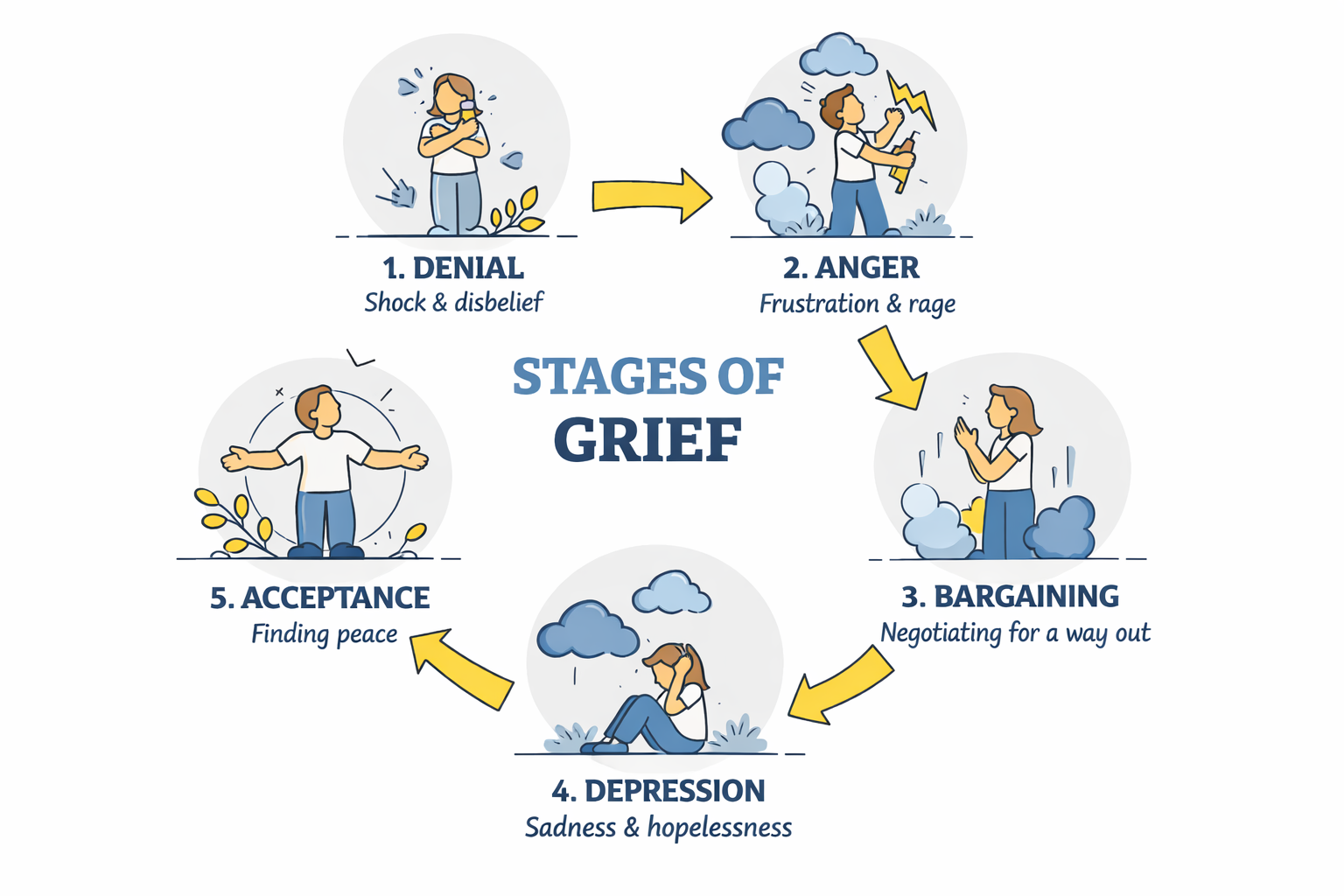
When someone we love passes away or we face a major life loss, emotions can feel overwhelming, unpredictable, and even confusing. You may ask yourself: “What are the five stages of grief and loss?” This model, first introduced by psychiatrist Elisabeth Kübler-Ross in 1969, outlines the common emotional stages people may go through when coping with loss. While not everyone experiences them in the same order, the framework helps us better understand grief and validates the wide range of emotions we feel.

In this article, we’ll walk through the five stages of grief, why they’re not as linear as people think, and how recognizing them can help you on your journey of healing.

What Are the Five Stages of Grief?

What Are the Five Stages of Grief and Loss

The five stages of grief are:

  1. Denial

  2. Anger

  3. Bargaining

  4. Depression

  5. Acceptance

These stages describe the emotional responses people may have when faced with significant loss, most commonly, the death of a loved one. But they can also apply to other forms of grief, such as divorce, job loss, illness, or other major life transitions.

It’s important to note that grief doesn’t follow a neat, step-by-step timeline. You might move back and forth between stages, skip one entirely, or feel multiple stages at once. The grief cycle is unique to every person.

Stage One: Denial

Denial is often the mind’s first defense against overwhelming pain. It can feel like numbness, shock, or disbelief. You may find yourself saying, “This can’t be real,” or going about your daily life as though nothing has changed.

Denial acts as a buffer, giving you time to process the reality of the loss slowly. For some, it lasts only a short period; for others, it may linger longer. Denial isn’t about refusing the truth; it’s your body and mind’s way of protecting you until you’re ready to face the weight of your grief.

Stage Two: Anger

Once the shock wears off, anger often rises to the surface. You may feel frustrated with yourself, with others, or even with the person who died. Some people direct their anger at doctors, God, or the unfairness of life itself.

This stage can feel uncomfortable because society often discourages open expressions of anger. But anger is a natural part of grief; it’s a way of channeling the intensity of pain into something more active. Recognizing it as a stage of healing can prevent you from bottling it up or feeling ashamed of it.

Stage Three: Bargaining

In the bargaining stage, you may find yourself replaying “what if” or “if only” scenarios. What if I had taken them to the doctor sooner? If only I had done things differently. These thoughts are part of trying to regain a sense of control when life feels completely out of control.

For people with spiritual or religious beliefs, bargaining might take the form of promises to a higher power: “If you bring them back, I’ll be a better person.” Although it doesn’t change the outcome, bargaining reflects the deep yearning to undo the loss and highlights the human need for meaning.

Stage Four: Depression

Depression in grief isn’t the same as clinical depression, though the two can overlap. This stage brings a deep sense of sadness, emptiness, and despair. You may lose interest in daily activities, feel withdrawn, or have trouble sleeping and eating.

It’s one of the longest and most challenging stages of grief, but it’s also a sign that you’re confronting the reality of your loss head-on. While painful, allowing yourself to feel sadness can help you process emotions rather than suppress them. Seeking support during this stage, whether through loved ones, support groups, or professional counselling, can make a tremendous difference.

Stage Five: Acceptance

Acceptance doesn’t mean you’re “over” the loss or that you no longer feel sadness. Instead, it means you’ve come to terms with the reality of the situation. You begin to find ways to live with the grief while still moving forward with your life.

In this stage, you may start creating new routines, rediscovering joy, and even finding ways to honor your loved one’s memory. Acceptance is about integration: carrying the love and memories with you while continuing to live fully.

What Is The Toughest Stage Of Grief?

While every person’s grief journey is unique, many mental health professionals and people who have experienced loss agree that the depression stage is often the hardest. Unlike denial, anger, or bargaining, which can feel more active, depression tends to be quiet, heavy, and isolating.

During this stage, people may withdraw socially, lose motivation, and struggle to find meaning in their daily lives. The sheer weight of sadness, combined with the physical exhaustion that grief often brings, makes this stage particularly draining.

That said, some find anger the hardest to manage because it can damage relationships, while others feel denial lingers longest and delays healing. The “toughest” stage depends on the individual, their support system, and their coping style. What’s important is to recognize that whichever stage feels most difficult, it is a natural part of the healing process, and support is available to help navigate it.

Why the Stages Aren’t Linear

A common misconception is that grief is a straight line: first denial, then anger, bargaining, depression, and finally acceptance. In reality, grief is far messier. You may cycle between anger and depression, experience acceptance only to feel denial again later, or skip some stages altogether.

Think of the stages as signposts rather than steps on a ladder. They describe the emotions many people encounter during grief, but there’s no “right” way to grieve. Your journey is unique, and moving through these stages may take weeks, months, or even years.

How to Cope With the Stages of Grief

Understanding the stages of grief is only the first step. Coping with them requires patience, self-compassion, and support. Here are some strategies that may help:

  • Allow your feelings: Whatever stage you’re in, remind yourself that your emotions are valid. Don’t pressure yourself to “get over it” quickly.

  • Seek connection: Talking about your grief with supportive friends, family, or support groups helps you feel less alone.

  • Practice self-care: Sleep, nutrition, and exercise may seem secondary during grief, but they are vital for emotional resilience.

  • Honor your loved one: Rituals like lighting a candle, creating a memory box, or journaling about your loved one can turn grief into meaningful remembrance.

  • Get professional support: If grief feels overwhelming or persistent, grief counselling or therapy can provide tools for navigating the journey.

Final Thoughts

So, what are the five stages of grief and loss? They are denial, anger, bargaining, depression, and acceptance, a framework that helps us understand the complexity of grief. But remember, they are not a rigid checklist. Grief is deeply personal, and your journey may not look like anyone else’s.

By recognizing these stages, you can better understand your emotions, normalize your experiences, and take steps toward healing at your own pace.

If you’re struggling to cope with grief and need compassionate support, Wellman Psychology offers grief counselling in Chicago, IL. Our experienced therapists provide a safe space to process your emotions and guide you toward healing. Contact us today to book an appointment and take the first step toward emotional recovery.

Feel free to check out our social media links below:

Find out more articles that can help you below:

How to Know If You Need Grief Counseling

Do I Need Grief Counseling? 6 Signs It Might Be Time

Losing someone you love is one of the most difficult experiences life can bring. Grief often comes with waves of sadness, anger, guilt, or even numbness, and while it’s a natural response to loss, it doesn’t look the same for everyone. Some people find that grief softens with time, while for others, the pain lingers and interferes with daily life. You may be asking yourself: “How to know if you need grief counseling?”

The truth is, there’s no wrong time to seek support. But recognizing when grief has become too heavy to carry alone can be the first step toward healing. Below, we’ll explore what grief counseling is, the signs you may benefit from it, and how professional help can make the journey more manageable.

What Is Grief Counseling?

How to Know If You Need Grief Counseling

Grief counseling is a form of therapy designed to help people navigate the intense emotions and challenges that follow loss. Unlike casual support from friends or family, grief counseling provides a structured, professional space to process emotions, explore coping tools, and address deeper struggles such as guilt, unresolved conflicts, or identity changes after loss.

A grief counselor or therapist doesn’t take your grief away; they help you learn to carry it differently. Through conversation, emotional support, and coping strategies, counseling can help you find your way back to balance, purpose, and hope.

6 Signs You Might Need Grief Counseling

Grief is personal, and there’s no universal timeline for “moving on.” Still, there are some clear signs that professional help might be the right step for you.

1. Your Grief Feels Overwhelming or Endless

It’s normal to feel deep sadness after a loss, but if months have passed and you still feel like you’re drowning in grief every day, it may be time to seek support. Persistent grief that doesn’t ease over time, sometimes called complicated grief, can make it difficult to see a path forward.

2. Daily Life Becomes Difficult

If grief keeps you from completing basic tasks like eating, sleeping, or working, it’s a signal that professional help may be needed. When loss interrupts your ability to function for extended periods, counseling can help you rebuild routines and find stability.

3. You Feel Stuck in One Stage of Grief

Some people remain locked in anger, guilt, or denial long after the loss. Others feel they can’t move past depression. While it’s natural to revisit different emotions, being “stuck” can prevent you from healing. A grief counselor can help you work through these blocks and progress at your own pace.

4. Isolation or Withdrawal from Others

Do you avoid friends, family, or social activities because the pain feels too heavy or because no one seems to understand? Isolation can make grief more difficult. Counseling provides a safe space where you don’t have to carry your emotions alone.

5. Physical Symptoms Linked to Grief

Grief doesn’t just affect your emotions; it can impact your body. Headaches, fatigue, chest tightness, sleep disturbances, and weakened immunity are common. If physical symptoms linger or worsen due to unresolved grief, professional support can help you address both emotional and physical health.

6. Hopelessness or Thoughts of Self-Harm

If grief leaves you feeling hopeless, worthless, or as though life is no longer worth living, it’s critical to seek help right away. Grief counseling and therapy can provide tools to restore hope, and in urgent cases, immediate professional support can be life-saving.

What Does Unhealthy Grieving Look Like?

While grief has no strict rules or timelines, there are warning signs when it becomes unhealthy. Unhealthy grieving, sometimes called complicated grief, happens when the pain of loss doesn’t gradually lessen but instead deepens or disrupts life long-term. It can look like:

  • Persistent denial of the loss, acting as though nothing has changed.

  • Intense yearning for the loved one that never eases with time.

  • Constant guilt or blame, often replaying “what if” scenarios.

  • Avoidance of reminders of the person, to the point of disrupting normal life.

  • Destructive coping habits, such as excessive drinking, overeating, or substance use.

  • Chronic depression or anxiety that prevents moving forward.

Recognizing these patterns doesn’t mean you’re grieving “wrong,” it means the weight of loss has become too much to bear alone. Grief counseling helps break these cycles, offering tools to process emotions in a healthier way.

How Grief Counseling Helps

Grief counseling works by offering personalized strategies that align with your needs. Some benefits include:

  • Validation of feelings – A professional helps you understand that your emotions are normal and not something to be ashamed of.

  • Healthy coping tools – Instead of numbing grief with unhealthy habits, you’ll learn constructive ways to manage it.

  • A safe space – Unlike friends or family who may not know what to say, grief counselors are trained to listen without judgment.

  • Support through milestones – Birthdays, anniversaries, and holidays can feel especially painful. Counseling can help prepare you for these moments.

When Should You Seek Counseling?

There’s no need to wait until grief feels unbearable before reaching out. Some people benefit from counseling right after a loss, while others seek help weeks, months, or even years later. If you’re questioning whether to go, that in itself is often a sign that counseling could help.

Final Thoughts

Grief is a natural part of life, but that doesn’t mean you have to go through it alone. Knowing when grief counseling might help can make the difference between being stuck in pain and finding a way to heal. If grief feels overwhelming, unending, or isolating, reaching out for support can provide relief and guidance as you move forward.

If you’re struggling with grief and wondering whether professional help is right for you, Wellman Psychology’s Grief Counselling in Chicago, IL is here to support you. Our compassionate team provides a safe and understanding environment to help you process loss and find healing at your own pace. Contact us today to book an appointment and take the first step toward recovery.

Feel free to check out our social media links below:

Find out more articles that can help you below: