


When Grief Becomes Unhealthy

Unhealthy Grief: What It Looks Like and How to Get Help

Losing someone you love is one of life’s most difficult experiences. Grief is the natural response to loss, and while it can be painful, it also plays a role in helping us heal. Over time, most people gradually adapt to their “new normal.” The sharp edges of grief may soften, and memories of the person shift from overwhelming sorrow to cherished reflection.

But what happens when grief doesn’t ease with time? What if the pain stays as raw as it was in the beginning or even intensifies? This is when grief can become unhealthy or complicated. Recognizing the difference between natural grieving and unresolved, harmful grief is critical for emotional and physical well-being.

What Is Unhealthy Grief?

When Grief Becomes Unhealthy

Unhealthy grief, sometimes called complicated grief or prolonged grief disorder, is when the natural healing process stalls. While it’s normal to experience sadness, anger, guilt, and fatigue after a loss, most people begin to adjust gradually. They may still miss their loved one deeply, but they find ways to function, reconnect with life, and rediscover meaning.

With unhealthy grief, that adjustment doesn’t happen. Instead, the mourner feels stuck in a cycle of longing, pain, or avoidance. Months or even years after the loss, the grief feels just as fresh as day one. Daily life, relationships, and work may all be disrupted. Importantly, this doesn’t mean someone is “failing” at grieving; it simply signals that the loss has created wounds too deep to heal without additional support.

Signs of Unhealthy or Complicated Grief

How can you tell whether grief is following its natural course or has shifted into something more concerning? Here are common signs:

  • Persistent, intense yearning for the deceased that doesn’t lessen with time.

  • Preoccupation with the loss, replaying “what ifs” or memories on a loop.

  • Avoidance of reminders—refusing to visit familiar places, touch belongings, or talk about the person.

  • Inability to function normally—struggling at work, withdrawing from social connections, or neglecting responsibilities.

  • Unrelenting guilt or blame, whether directed inward (“I should’ve done more”) or outward (“It’s someone else’s fault”).

  • Emotional numbness—feeling disconnected from people or activities that once mattered.

  • Hopelessness or self-harm thoughts related to the loss.

While short bursts of these feelings can be normal early on, their persistence for many months or their severity can indicate unhealthy grief.

Common Unhealthy Coping Mechanisms

When grief feels unbearable, it’s natural to want relief. But sometimes the coping strategies people turn to cause more harm than good:

  • Substance use: Alcohol, drugs, or even prescription misuse may numb emotions temporarily, but often deepen depression and isolation.

  • Overworking: Throwing oneself into work to avoid emotions may delay healing, leading to burnout.

  • Social withdrawal: Avoiding family or friends might feel protective, but it often worsens loneliness.

  • Risk-taking behaviors: Reckless driving, overspending, or unsafe habits can serve as distractions but create additional stress and danger.

These patterns provide short-term distraction but prevent genuine healing.

Normal Grief vs. Unhealthy Grief

It helps to see the differences side by side.

Normal Grief

Unhealthy / Complicated Grief

Intense emotions early on that gradually soften with time

Intensity of emotions remains constant or worsens over time

A person is able to function (work, relationships) even if with difficulty

Daily functioning is severely impaired or impossible

Can think of the loved one with both sadness and fondness as months pass

Focus remains almost exclusively on the pain of the loss

Acceptance and adaptation occur over time

Feeling “stuck” in grief with little progress toward healing

This table highlights why recognizing unhealthy grief is so important it signals when extra support is necessary.

When Does Grief Become a Disorder?

In 2022, the American Psychiatric Association (APA) added Prolonged Grief Disorder to its diagnostic manual. This condition describes grief lasting more than 12 months (or six months for children) that causes significant disruption to life.

That doesn’t mean grief has an “expiration date.” Everyone heals at a different pace. But when grief prevents you from returning to daily routines, enjoying life, or feeling connected to others, it may meet the threshold for clinical intervention.

The Health Impact of Unresolved Grief

Unhealthy grief isn’t just emotional; it also takes a physical toll. Studies show prolonged grief can trigger:

  • Cardiovascular strain: Higher risk of high blood pressure, irregular heartbeat, and even heart disease.

  • Weakened immune system: Making you more vulnerable to colds, infections, and slower recovery.

  • Digestive issues: Stomach aches, nausea, or changes in appetite.

  • Sleep disturbances: Insomnia, frequent waking, or nightmares.

  • Chronic stress responses: Increased cortisol (stress hormone) levels, leading to anxiety and depression.

This “mind-body” connection means untreated grief can silently erode long-term health.

Why Some Grief Becomes Unhealthy

Not everyone develops complicated grief. Some factors increase the risk:

  • Sudden or traumatic loss (such as accidents, suicide, or natural disasters).

  • Very close relationships, such as losing a child or life partner.

  • Previous mental health challenges, including depression or anxiety.

  • Lack of social support, leaving the mourner isolated.

  • Unresolved issues with the deceased, such as conflicts or guilt.

These factors don’t guarantee unhealthy grief, but they can make it harder for the natural grieving process to unfold.

How Grief Therapy Helps

Grief therapy offers tools, support, and structured healing for those stuck in complicated grief. A therapist can help you:

  • Process unresolved emotions: Talking through guilt, anger, or regrets in a safe space.

  • Develop healthy coping skills: Learning techniques like mindfulness, journaling, or grounding exercises to manage overwhelming emotions.

  • Rebuild life routines: Gradually reintroducing meaning, purpose, and social connection.

  • Honor your loved one: Creating rituals or practices that allow ongoing connection while still moving forward.

Therapy doesn’t erase grief; it helps you carry it in a way that doesn’t crush your ability to live fully.

When to Seek Help

Reaching out for grief counseling isn’t about being weak; it’s about being proactive. Consider professional support if:

  • Your grief hasn’t eased after many months.

  • You feel unable to function at work or in relationships.

  • You avoid people or places connected to your loved one.

  • You rely on substances or unhealthy habits to cope.

  • You feel life has lost meaning, or have thoughts of self-harm.

Getting help early can prevent grief from spiraling into deeper health or mental challenges.

Wrapping It Up

Grief is never easy, and there’s no single timeline for healing. But when sorrow becomes overwhelming, persistent, and disruptive, it may have crossed into unhealthy grief. Recognizing the difference allows you to seek the right kind of help and support that validates your pain while guiding you toward recovery.

Unhealthy grief is not a personal failure. It’s a sign that you need extra support to move forward. With therapy and compassionate care, it’s possible to process loss, rediscover meaning, and continue honoring your loved one while building a fulfilling life.

If you recognize yourself in these signs of complicated grief, you don’t have to face it alone. Wellman Psychology’s Grief Counselling Chicago IL, provides compassionate, evidence-based support to help you navigate loss and regain balance. Book an appointment today and take the first step toward healing, resilience, and hope.

Feel free to check out our social media links below:

Find out more articles that can help you below:
What Are the Five Stages of Grief and Loss

The 5 Stages of Grief Explained—And Why Everyone Experiences Them Differently

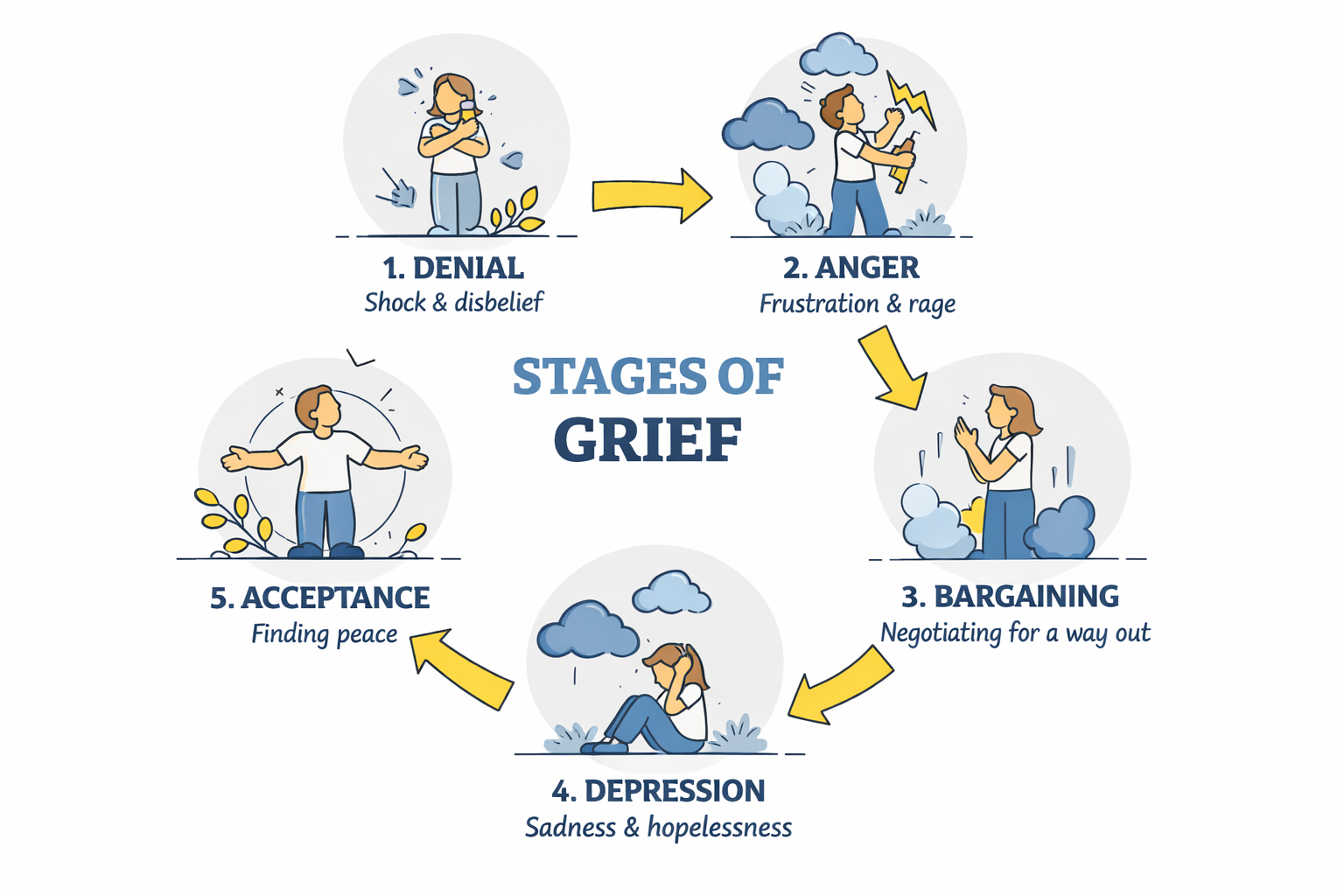
When someone we love passes away or we face a major life loss, emotions can feel overwhelming, unpredictable, and even confusing. You may ask yourself: “What are the five stages of grief and loss?” This model, first introduced by psychiatrist Elisabeth Kübler-Ross in 1969, outlines the common emotional stages people may go through when coping with loss. While not everyone experiences them in the same order, the framework helps us better understand grief and validates the wide range of emotions we feel.

In this article, we’ll walk through the five stages of grief, why they’re not as linear as people think, and how recognizing them can help you on your journey of healing.

What Are the Five Stages of Grief?

What Are the Five Stages of Grief and Loss

The five stages of grief are:

  1. Denial

  2. Anger

  3. Bargaining

  4. Depression

  5. Acceptance

These stages describe the emotional responses people may have when faced with significant loss, most commonly, the death of a loved one. But they can also apply to other forms of grief, such as divorce, job loss, illness, or other major life transitions.

It’s important to note that grief doesn’t follow a neat, step-by-step timeline. You might move back and forth between stages, skip one entirely, or feel multiple stages at once. The grief cycle is unique to every person.

Stage One: Denial

Denial is often the mind’s first defense against overwhelming pain. It can feel like numbness, shock, or disbelief. You may find yourself saying, “This can’t be real,” or going about your daily life as though nothing has changed.

Denial acts as a buffer, giving you time to process the reality of the loss slowly. For some, it lasts only a short period; for others, it may linger longer. Denial isn’t about refusing the truth; it’s your body and mind’s way of protecting you until you’re ready to face the weight of your grief.

Stage Two: Anger

Once the shock wears off, anger often rises to the surface. You may feel frustrated with yourself, with others, or even with the person who died. Some people direct their anger at doctors, God, or the unfairness of life itself.

This stage can feel uncomfortable because society often discourages open expressions of anger. But anger is a natural part of grief; it’s a way of channeling the intensity of pain into something more active. Recognizing it as a stage of healing can prevent you from bottling it up or feeling ashamed of it.

Stage Three: Bargaining

In the bargaining stage, you may find yourself replaying “what if” or “if only” scenarios. What if I had taken them to the doctor sooner? If only I had done things differently. These thoughts are part of trying to regain a sense of control when life feels completely out of control.

For people with spiritual or religious beliefs, bargaining might take the form of promises to a higher power: “If you bring them back, I’ll be a better person.” Although it doesn’t change the outcome, bargaining reflects the deep yearning to undo the loss and highlights the human need for meaning.

Stage Four: Depression

Depression in grief isn’t the same as clinical depression, though the two can overlap. This stage brings a deep sense of sadness, emptiness, and despair. You may lose interest in daily activities, feel withdrawn, or have trouble sleeping and eating.

It’s one of the longest and most challenging stages of grief, but it’s also a sign that you’re confronting the reality of your loss head-on. While painful, allowing yourself to feel sadness can help you process emotions rather than suppress them. Seeking support during this stage, whether through loved ones, support groups, or professional counselling, can make a tremendous difference.

Stage Five: Acceptance

Acceptance doesn’t mean you’re “over” the loss or that you no longer feel sadness. Instead, it means you’ve come to terms with the reality of the situation. You begin to find ways to live with the grief while still moving forward with your life.

In this stage, you may start creating new routines, rediscovering joy, and even finding ways to honor your loved one’s memory. Acceptance is about integration: carrying the love and memories with you while continuing to live fully.

What Is The Toughest Stage Of Grief?

While every person’s grief journey is unique, many mental health professionals and people who have experienced loss agree that the depression stage is often the hardest. Unlike denial, anger, or bargaining, which can feel more active, depression tends to be quiet, heavy, and isolating.

During this stage, people may withdraw socially, lose motivation, and struggle to find meaning in their daily lives. The sheer weight of sadness, combined with the physical exhaustion that grief often brings, makes this stage particularly draining.

That said, some find anger the hardest to manage because it can damage relationships, while others feel denial lingers longest and delays healing. The “toughest” stage depends on the individual, their support system, and their coping style. What’s important is to recognize that whichever stage feels most difficult, it is a natural part of the healing process, and support is available to help navigate it.

Why the Stages Aren’t Linear

A common misconception is that grief is a straight line: first denial, then anger, bargaining, depression, and finally acceptance. In reality, grief is far messier. You may cycle between anger and depression, experience acceptance only to feel denial again later, or skip some stages altogether.

Think of the stages as signposts rather than steps on a ladder. They describe the emotions many people encounter during grief, but there’s no “right” way to grieve. Your journey is unique, and moving through these stages may take weeks, months, or even years.

How to Cope With the Stages of Grief

Understanding the stages of grief is only the first step. Coping with them requires patience, self-compassion, and support. Here are some strategies that may help:

  • Allow your feelings: Whatever stage you’re in, remind yourself that your emotions are valid. Don’t pressure yourself to “get over it” quickly.

  • Seek connection: Talking about your grief with supportive friends, family, or support groups helps you feel less alone.

  • Practice self-care: Sleep, nutrition, and exercise may seem secondary during grief, but they are vital for emotional resilience.

  • Honor your loved one: Rituals like lighting a candle, creating a memory box, or journaling about your loved one can turn grief into meaningful remembrance.

  • Get professional support: If grief feels overwhelming or persistent, grief counselling or therapy can provide tools for navigating the journey.

Final Thoughts

So, what are the five stages of grief and loss? They are denial, anger, bargaining, depression, and acceptance, a framework that helps us understand the complexity of grief. But remember, they are not a rigid checklist. Grief is deeply personal, and your journey may not look like anyone else’s.

By recognizing these stages, you can better understand your emotions, normalize your experiences, and take steps toward healing at your own pace.

If you’re struggling to cope with grief and need compassionate support, Wellman Psychology offers grief counselling in Chicago, IL. Our experienced therapists provide a safe space to process your emotions and guide you toward healing. Contact us today to book an appointment and take the first step toward emotional recovery.

Feel free to check out our social media links below:

Find out more articles that can help you below:

How to Know If You Need Grief Counseling

Do I Need Grief Counseling? 6 Signs It Might Be Time

Losing someone you love is one of the most difficult experiences life can bring. Grief often comes with waves of sadness, anger, guilt, or even numbness, and while it’s a natural response to loss, it doesn’t look the same for everyone. Some people find that grief softens with time, while for others, the pain lingers and interferes with daily life. You may be asking yourself: “How to know if you need grief counseling?”

The truth is, there’s no wrong time to seek support. But recognizing when grief has become too heavy to carry alone can be the first step toward healing. Below, we’ll explore what grief counseling is, the signs you may benefit from it, and how professional help can make the journey more manageable.

What Is Grief Counseling?

How to Know If You Need Grief Counseling

Grief counseling is a form of therapy designed to help people navigate the intense emotions and challenges that follow loss. Unlike casual support from friends or family, grief counseling provides a structured, professional space to process emotions, explore coping tools, and address deeper struggles such as guilt, unresolved conflicts, or identity changes after loss.

A grief counselor or therapist doesn’t take your grief away; they help you learn to carry it differently. Through conversation, emotional support, and coping strategies, counseling can help you find your way back to balance, purpose, and hope.

6 Signs You Might Need Grief Counseling

Grief is personal, and there’s no universal timeline for “moving on.” Still, there are some clear signs that professional help might be the right step for you.

1. Your Grief Feels Overwhelming or Endless

It’s normal to feel deep sadness after a loss, but if months have passed and you still feel like you’re drowning in grief every day, it may be time to seek support. Persistent grief that doesn’t ease over time, sometimes called complicated grief, can make it difficult to see a path forward.

2. Daily Life Becomes Difficult

If grief keeps you from completing basic tasks like eating, sleeping, or working, it’s a signal that professional help may be needed. When loss interrupts your ability to function for extended periods, counseling can help you rebuild routines and find stability.

3. You Feel Stuck in One Stage of Grief

Some people remain locked in anger, guilt, or denial long after the loss. Others feel they can’t move past depression. While it’s natural to revisit different emotions, being “stuck” can prevent you from healing. A grief counselor can help you work through these blocks and progress at your own pace.

4. Isolation or Withdrawal from Others

Do you avoid friends, family, or social activities because the pain feels too heavy or because no one seems to understand? Isolation can make grief more difficult. Counseling provides a safe space where you don’t have to carry your emotions alone.

5. Physical Symptoms Linked to Grief

Grief doesn’t just affect your emotions; it can impact your body. Headaches, fatigue, chest tightness, sleep disturbances, and weakened immunity are common. If physical symptoms linger or worsen due to unresolved grief, professional support can help you address both emotional and physical health.

6. Hopelessness or Thoughts of Self-Harm

If grief leaves you feeling hopeless, worthless, or as though life is no longer worth living, it’s critical to seek help right away. Grief counseling and therapy can provide tools to restore hope, and in urgent cases, immediate professional support can be life-saving.

What Does Unhealthy Grieving Look Like?

While grief has no strict rules or timelines, there are warning signs when it becomes unhealthy. Unhealthy grieving, sometimes called complicated grief, happens when the pain of loss doesn’t gradually lessen but instead deepens or disrupts life long-term. It can look like:

  • Persistent denial of the loss, acting as though nothing has changed.

  • Intense yearning for the loved one that never eases with time.

  • Constant guilt or blame, often replaying “what if” scenarios.

  • Avoidance of reminders of the person, to the point of disrupting normal life.

  • Destructive coping habits, such as excessive drinking, overeating, or substance use.

  • Chronic depression or anxiety that prevents moving forward.

Recognizing these patterns doesn’t mean you’re grieving “wrong,” it means the weight of loss has become too much to bear alone. Grief counseling helps break these cycles, offering tools to process emotions in a healthier way.

How Grief Counseling Helps

Grief counseling works by offering personalized strategies that align with your needs. Some benefits include:

  • Validation of feelings – A professional helps you understand that your emotions are normal and not something to be ashamed of.

  • Healthy coping tools – Instead of numbing grief with unhealthy habits, you’ll learn constructive ways to manage it.

  • A safe space – Unlike friends or family who may not know what to say, grief counselors are trained to listen without judgment.

  • Support through milestones – Birthdays, anniversaries, and holidays can feel especially painful. Counseling can help prepare you for these moments.

When Should You Seek Counseling?

There’s no need to wait until grief feels unbearable before reaching out. Some people benefit from counseling right after a loss, while others seek help weeks, months, or even years later. If you’re questioning whether to go, that in itself is often a sign that counseling could help.

Final Thoughts

Grief is a natural part of life, but that doesn’t mean you have to go through it alone. Knowing when grief counseling might help can make the difference between being stuck in pain and finding a way to heal. If grief feels overwhelming, unending, or isolating, reaching out for support can provide relief and guidance as you move forward.

If you’re struggling with grief and wondering whether professional help is right for you, Wellman Psychology’s Grief Counselling in Chicago, IL is here to support you. Our compassionate team provides a safe and understanding environment to help you process loss and find healing at your own pace. Contact us today to book an appointment and take the first step toward recovery.

Feel free to check out our social media links below:

Find out more articles that can help you below:

How Does Grief Affect the Body

Physical Signs of Grief You Shouldn’t Ignore

Grief is often thought of as an emotional experience crying, sadness, longing, or anger. But many people don’t realize that grief can affect the body just as powerfully as it does the mind. You may have asked yourself: “How does grief affect the body?” The answer is that grief triggers a whole-body response, influencing everything from your heart and immune system to your sleep and digestion.

Understanding the physical effects of grief can help normalize your experience and remind you to take care of both your mental and physical health while you heal.

The Mind-Body Connection in Grief

How Does Grief Affect the Body

The human body and mind are deeply connected. When you experience grief, your body interprets it as a form of stress. This stress activates your fight-or-flight response, flooding your system with stress hormones like cortisol and adrenaline. While this response is helpful in short bursts, prolonged stress, such as ongoing grief, can take a toll on your health.

This is why grief doesn’t just stay in your heart or mind. It shows up in your body in ways that might feel confusing or overwhelming.

Physical Symptoms of Grief

1. Heart Health

Grief can literally feel like a broken heart. Studies have shown that extreme emotional distress can trigger “broken heart syndrome” (stress-induced cardiomyopathy), where the heart weakens temporarily due to a surge in stress hormones. Symptoms can mimic a heart attack, with chest pain, shortness of breath, or heart palpitations.

Even if symptoms aren’t this dramatic, grieving people often report changes in heart rate and blood pressure, which can increase the risk of cardiovascular issues if left unchecked.

2. Immune System Weakness

Grief can make you more vulnerable to colds, infections, and illness. The stress hormones produced during grief weaken the immune system, reducing your body’s ability to fight off germs. This is why people in mourning may find themselves getting sick more often.

3. Sleep Disruptions

Insomnia and restless sleep are common during grief. Racing thoughts, sadness, or even nightmares can keep you awake at night. Without proper rest, the body struggles to repair itself, leading to fatigue, irritability, and difficulty concentrating during the day.

4. Digestive Issues

The stomach and gut are sensitive to stress. Many grieving people experience nausea, loss of appetite, diarrhea, or stomach pain. Others may turn to comfort foods, overeating as a way to cope. These shifts in eating habits can cause weight loss or gain during the grieving period.

5. Muscle Pain and Fatigue

Emotional pain often translates into physical pain. Tension in the shoulders, neck, and back is common, as grief causes muscles to tighten. Some people also feel generalized fatigue or weakness, as though their body is carrying the emotional weight of their loss.

6. Headaches and Migraines

Stress and emotional strain can trigger frequent headaches or migraines. These may come from tension in the muscles, lack of sleep, or dehydration caused by crying and stress.

7. Hormonal Imbalance

Long-term grief can disrupt the body’s hormonal balance, leading to irregular menstrual cycles, changes in libido, or fluctuations in energy levels.

Why Grief Affects the Body So Strongly

Grief is more than sadness it’s an all-encompassing stressor. Your body perceives grief as a threat to your well-being, keeping your nervous system in a heightened state of alert. Over time, this prolonged stress weakens your body’s natural balance and resilience.

The body also remembers loss through somatic memory, the way emotional trauma embeds itself physically. For example, you may notice tightness in your chest or knots in your stomach when thinking about your loved one. These reactions show just how intertwined our emotional and physical selves are.

Coping With the Physical Effects of Grief

While you can’t eliminate grief, you can take steps to ease its physical impact on your body.

Prioritize Rest

Your body needs extra sleep during grief. Create a bedtime routine, avoid screens before bed, and consider calming practices like reading, meditation, or warm tea to help you unwind.

Eat Nourishing Foods

Loss of appetite is common, but fueling your body with balanced meals will give you strength. Lean proteins, fruits, vegetables, and whole grains provide energy and boost immune health.

Move Your Body

Gentle exercise like walking, stretching, or yoga can release tension and produce endorphins, natural mood lifters. Exercise also helps regulate sleep and digestion.

Stay Hydrated

Crying, stress, and lack of appetite can dehydrate you. Drink plenty of water to reduce headaches, fatigue, and muscle cramps.

Seek Social and Professional Support

Talking with loved ones, joining support groups, or working with a grief counsellor can reduce emotional stress and, in turn, lower the physical burden on your body.

When to Seek Medical Help

Sometimes the physical effects of grief go beyond what’s expected. If you experience severe chest pain, difficulty breathing, chronic digestive issues, or prolonged insomnia, it’s important to see a doctor. These symptoms may be grief-related, but they could also signal underlying health problems that need treatment.

Final Thoughts

Grief doesn’t just live in the heart; it shows up in the body, too. From headaches and stomach aches to weakened immunity and heart strain, the physical effects of grief are real and deserve attention. By caring for your body with rest, nutrition, movement, and support, you can ease the burden of grief and give yourself space to heal.

If grief feels overwhelming and is taking a toll on your physical or emotional health, professional support can help. Wellman Psychology offers grief counselling in Chicago, IL, designed to support both your mental and physical well-being during this difficult time. Contact us today to book an appointment and take the first step toward healing.

Feel free to check out our social media links below:

Find out more articles that can help you below:

What Does It Mean to Recognize Your Grief Triggers

How to Identify and Manage Emotional Triggers During Grief

Grief is one of the most personal and complex experiences a person can go through. While everyone’s healing process looks different, many grieving individuals find themselves suddenly overwhelmed by emotions that seem to come out of nowhere. These moments are often tied to grief triggers reminders of a loved one or the loss itself. You might wonder: “What does it mean to recognize your grief triggers?” Recognizing them means understanding the situations, people, places, or even smells and sounds that stir up painful emotions, so you can respond with awareness rather than being caught off guard.

What Are Grief Triggers?

What Does It Mean to Recognize Your Grief Triggers

Grief triggers are emotional responses sparked by reminders of the person you lost or the life you shared together. They can be obvious, such as your loved one’s birthday, or subtle, like hearing their favorite song play while you’re at the grocery store. A simple scent like the perfume they wore, or the smell of their cooking, can transport you back in time and stir up powerful emotions.

Triggers often catch people off guard because grief is not a straight line. Even if you feel like you’ve been coping well, a single reminder can suddenly bring sadness, anger, or longing rushing back. This doesn’t mean you are “regressing” in your healing. Rather, it shows how deeply your loved one remains woven into your daily life.

Why It’s Important to Recognize Grief Triggers

Awareness of grief triggers is one of the most powerful tools in the healing process. Without recognizing them, you may feel like your emotions are unpredictable and overwhelming. By naming and understanding triggers, you take back some control.

  • Preparation: Knowing when and where triggers are likely to happen allows you to prepare emotionally. For example, if you know holidays are difficult, you can plan supportive activities or create new traditions.

  • Coping strategies: Awareness makes it easier to develop strategies like calling a friend, journaling, or practicing deep breathing when triggers arise.

  • Emotional validation: Recognizing triggers also helps you see that your feelings are valid and part of the natural grieving process. Instead of blaming yourself for “not moving on,” you can see the trigger as a natural response to a reminder of your loved one.

  • Reducing fear: Many people fear their emotions when they come suddenly. When you understand triggers, the fear of being “ambushed” by grief lessens.

Common Examples of Grief Triggers

While grief triggers are highly individual, certain experiences tend to affect many people:

  • Anniversaries and birthdays: The dates of your loved one’s birth, passing, or even your wedding anniversary can spark deep feelings of longing and sadness.

  • Holidays and family gatherings: Missing someone during special traditions often makes their absence feel especially painful.

  • Songs, scents, or foods: Sensory triggers are powerful. A favorite dish, the smell of cologne, or a song that once played on road trips together can bring memories flooding back.

  • Places tied to memories: Driving past your loved one’s workplace, favorite café, or even your shared home can bring up emotions.

  • Objects and keepsakes: Looking at old photos, clothing, or personal belongings can stir up waves of grief.

Some triggers may even surprise you. For example, a TV commercial or casual conversation may touch on a theme connected to your loss, and suddenly you feel your chest tighten. Recognizing these unexpected moments as triggers can help you respond with compassion rather than confusion.

How to Recognize Your Grief Triggers

Pay Attention to Emotional Patterns

Notice when your emotions feel heavier than usual. Does your sadness spike at certain times, like evenings or weekends? Do certain dates seem harder to get through? Tracking these patterns in a journal can help you predict when grief might resurface.

Tune Into Physical Reactions

Your body often signals triggers before your mind catches on. Tightness in the chest, a lump in your throat, or sudden fatigue can indicate that something around you is stirring grief. Learning to link these physical symptoms with emotional triggers helps you respond sooner.

Reflect on Routines and Habits

Daily routines often hold hidden grief triggers. Maybe it’s pouring two cups of coffee instead of one, watching a show you used to enjoy together, or walking by the chair they always sat in. Reflecting on your habits can help you notice which ones spark unexpected sadness.

Coping With Grief Triggers

Recognizing triggers is only half the journey. The next step is learning to cope with them in healthy ways.

Create a Plan for Difficult Days

If you know a holiday or anniversary is approaching, plan ahead. Some people choose to surround themselves with friends or family for support, while others prefer quiet reflection. You might create a new tradition, such as lighting a candle or visiting a special place, to honor your loved one.

Practice Grounding Techniques

Grounding exercises can help you manage the physical and emotional intensity of triggers. Simple methods like deep breathing, focusing on your senses (naming things you can see, hear, and feel), or repeating a calming phrase can anchor you in the present moment.

Honor the Memory Instead of Avoiding It

Sometimes leaning into the trigger can bring healing. Writing a letter to your loved one, cooking their favorite meal, or listening to their favorite music can turn a painful reminder into an act of connection. Avoidance may seem easier in the short term, but honoring the memory allows you to integrate your grief in meaningful ways.

Build a Support Network

Sharing your experiences with trusted friends or family can ease the weight of triggers. Simply saying, “Today is hard because it’s Mom’s birthday,” can invite empathy and support. If you find it hard to lean on friends, grief support groups—both in person and online—offer spaces where others understand exactly what you’re going through.

Seek Professional Help When Needed

If triggers begin interfering with daily life or causing overwhelming distress, a grief counsellor or therapist can help. Professional support provides tools for managing triggers and reframing the way you experience them, turning overwhelming pain into more manageable moments of remembrance.

Healing Doesn’t Mean Forgetting

It’s important to understand that coping with grief triggers doesn’t mean you’ll eliminate them. You may always feel emotional when you hear your loved one’s favorite song or pass a place filled with memories. Healing is not about forgetting; it’s about finding ways to carry the memory with you while continuing to live fully. Over time, the intensity of the triggers often softens, and moments that once caused only pain can begin to bring comfort, gratitude, and even joy for the time you shared.

Bottom Line: What Does It Mean to Recognize Your Grief Triggers?

So, what does it mean to recognize your grief triggers? It means identifying the reminders, big or small, that stir up your emotions, understanding why they affect you, and learning to cope with them in healthy ways. Triggers are a natural part of grief, but they don’t have to control you. With awareness, self-compassion, and support, you can navigate them with more resilience and integrate your loved one’s memory into your ongoing life.

If you’re struggling with grief triggers and need help managing overwhelming emotions, Wellman Psychology offers Grief Counselling Chicago. Our compassionate therapists will guide you through your healing journey and help you find practical, supportive strategies to cope. Contact us today to book an appointment and take the next step toward balance and emotional healing.

Feel free to check out our social media links below:

Find out more articles that can help you below: