


Anxiety

Can You Have a Panic Attack in Your Sleep? What to Know

Yes, a panic attack can wake you from sleep. Known as nocturnal panic, the experience may involve sudden fear and frightening physical sensations, even without a remembered nightmare.

However, waking with a racing heart or difficulty breathing does not establish that panic caused it. This guide explains nighttime panic, overlapping sleep conditions, when medical assessment is needed, and options for ongoing support at Wellman Psychology in Chicago.
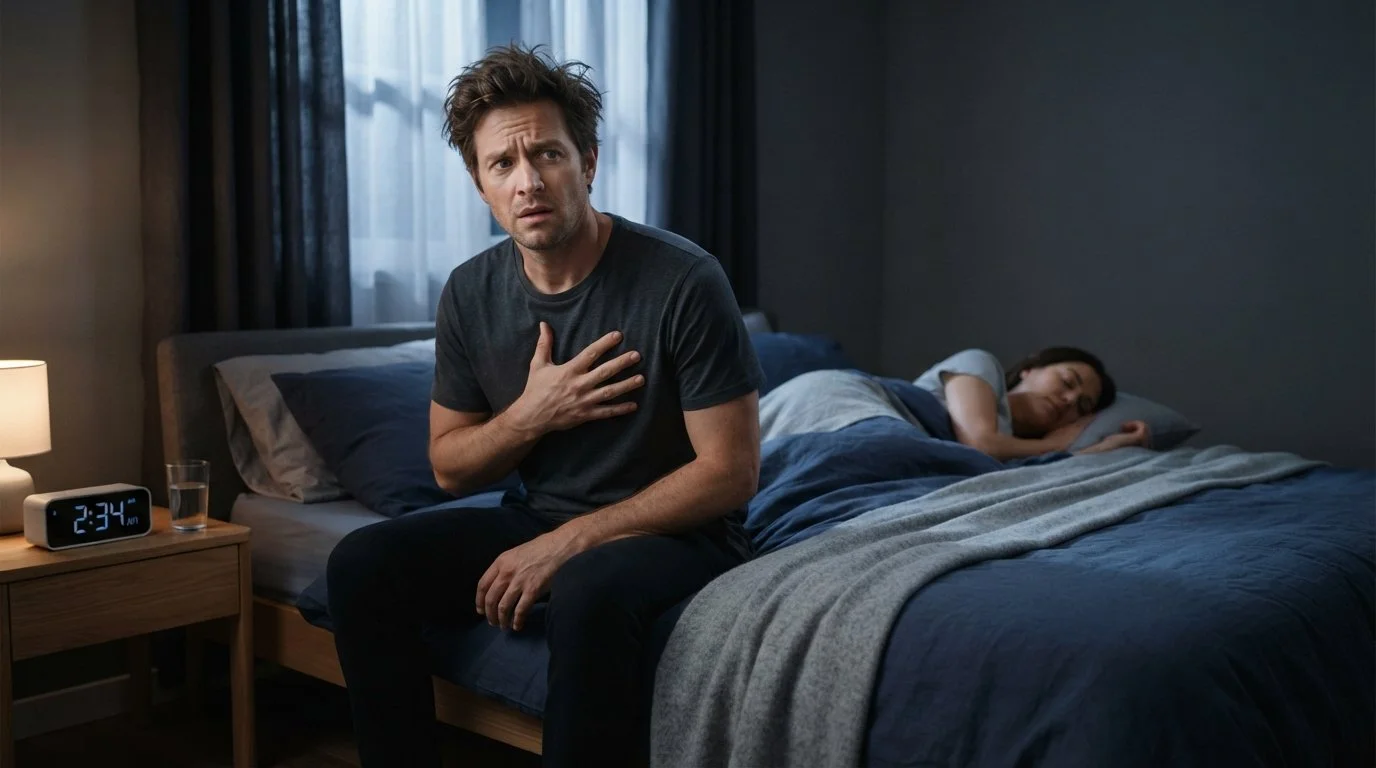
Man sitting on the edge of his bed after suddenly waking up with symptoms of a possible nocturnal panic attack.

What Is a Nocturnal Panic Attack?

According to Cleveland Clinic, a nocturnal panic attack awakens someone in a state of panic, aware of the fear and physical symptoms. Returning to sleep may be difficult afterward.

Common Nighttime Panic Symptoms

The experience may include:

  • A racing or pounding heart.

  • Sweating, trembling, or chills.

  • Breathlessness or a choking sensation.

  • Nausea, tingling, or intense dread.

The most intense sensations may peak quickly while worry or difficulty returning to sleep continues. That lingering distress does not necessarily mean the attack remains at peak intensity.

Panic During Sleep Versus Worry Before Bed

Lying awake worrying about tomorrow is different from being awakened by panic. Both can disrupt sleep and may occur together, but the distinction helps a clinician understand the pattern.

A nighttime episode does not automatically establish panic disorder. Assessment considers recurrence, ongoing concern, daily impact, and other possible explanations.

First, Consider Whether Symptoms Need Medical Attention

When to Call 911

Call 911 for severe chest pain or pressure, severe breathing difficulty, collapse, or sudden trouble speaking or weakness on one side. Do not assume these symptoms are panic because they happen at night or you have an anxiety diagnosis.

Do not delay help while trying a breathing exercise or waiting to see whether symptoms settle. Avoid driving yourself if you may be having a medical emergency, and follow the dispatcher’s instructions.

When New or Recurring Nighttime Symptoms Need Assessment

Arrange medical assessment for a first unexplained episode, symptoms that differ from previously assessed attacks, or recurring awakenings that disrupt sleep. Persistent symptoms also deserve attention.

There is no required waiting period before asking for help. If there are no emergency warning signs but you are unsure how urgently to seek care, contact your healthcare provider or a nurse advice line.

How Nocturnal Panic Differs From Other Nighttime Events

Several experiences can cause frightening awakenings. Awareness, recall, and partner observations can help guide assessment. No single feature in this comparison confirms a diagnosis.

Experience

What may be noticed

Useful information to share

Nocturnal panic

Waking aware of intense fear and physical symptoms

What you felt on waking and afterward

Nightmare

Awakening from a frightening dream

Any remembered dream content

Night terror

Screaming, movement, or apparent fear while not fully awake

A partner’s observations and later recall

Sleep paralysis

Temporary inability to move or speak while falling asleep or waking

Whether awareness was present during the immobility

Sleep apnea

Interrupted breathing, snoring, or gasping during sleep

Witnessed breathing pauses and daytime effects

Nightmares, Night Terrors, and Sleep Paralysis

Unlike panic arising from sleep, a nightmare involves frightening dream content. However, recall may be incomplete, and experiences can overlap.

During a night terror, someone may appear awake without being fully aware of what is happening. Sleep paralysis concerns temporary immobility around a sleep transition. These distinctions help organize the history rather than settle the diagnosis.

Sleep Apnea and Other Medical Explanations

The National Heart, Lung, and Blood Institute identifies breathing pauses, loud snoring, gasping, and daytime sleepiness as symptoms to discuss when assessing sleep apnea.

Waking frightened after a breathing interruption is not automatically the same as nocturnal panic. Anxiety and a sleep-related breathing condition can also coexist.

Other medical conditions, including asthma or thyroid problems, may produce overlapping symptoms. A clinician can consider the broader history and decide what evaluation is appropriate.

Why Might Panic Occur During Sleep?

Possible Contributors Without a Single Proven Cause

According to Mayo Clinic, the causes of nighttime panic are not fully understood. Genetics, stress, and differences in how the brain processes fear may contribute, but they do not explain every individual episode.

A clinician may explore your sleep pattern, daytime panic, current stress, medications, and substance use. These questions help build a picture rather than prove that one factor caused an awakening.

You do not need to assume that an episode reveals hidden trauma or a frightening thought you cannot remember. Identifying stress also does not rule out a medical condition.

What Non-REM Sleep Research Can Tell Us

Sleep research has described nocturnal panic arising during non-REM sleep, the stages outside rapid eye movement sleep.

Observing a sleep-stage association does not establish why an attack occurs or mean that a particular transition causes every episode. You cannot reliably identify your sleep stage from the time on the clock or how an awakening feels.

These findings provide clinical context rather than a reason to monitor every overnight change.

What to Do After Waking With Familiar Panic Symptoms

For symptoms that match episodes you have previously had assessed, follow your agreed care plan. Use the medical guidance above when the experience is new, different, or concerning.

Safe Positioning and One Optional Coping Tool

Pause before getting out of bed, especially if you feel dizzy. Find a comfortable, supported position and orient yourself to the room.

Choose one manageable option:

  • Gentle breathing: Allow a comfortable breath in and an unforced breath out. Avoid repeatedly trying to fill your lungs, compulsory breath holds, and paper-bag breathing.

  • External grounding: Notice three objects nearby, feel the bedding beneath your hands, or listen for an ordinary sound.

Stop an exercise if it increases discomfort. You do not need to force yourself to feel calm or fall asleep immediately. Avoid taking extra medication or unprescribed sedatives to end the episode.

How a Partner Can Help

A partner can use short, steady sentences and ask, “Would you like quiet company or help with your usual plan?”

Ask permission before touching or guiding the person. Avoid insisting on breathing exercises or repeatedly checking whether they feel better. Seek medical help when indicated rather than continuing coping prompts.

What to Expect From an Assessment

Useful Symptom History and Partner Observations

A clinician will ask about the awakenings and their effect on sleep and daytime functioning. Prepare a brief account of:

  • What you noticed first and what happened afterward.

  • How often episodes occur and whether they are changing.

  • Any dream recall, snoring, gasping, or witnessed breathing pauses.

  • Daytime panic, bedtime worry, sleepiness, or difficulty concentrating.

  • Relevant health conditions, previous assessments, medications, caffeine, alcohol, and other substances.

With your permission, a partner’s observations may help clarify events you do not remember. You do not need continuous recordings or repeated pulse checks.

When Medical Tests or a Sleep Study May Be Appropriate

Your clinician may recommend an examination, selected tests, or referral to sleep medicine based on the findings. A sleep study may be appropriate when a sleep-related breathing problem or another sleep disorder is suspected.

Not everyone needs the same investigations. Consumer sleep trackers cannot independently confirm nocturnal panic or exclude a sleep disorder. Ask what each recommended assessment would clarify and how it could affect treatment.

Treatment for Recurring Nighttime Panic and Sleep Disruption

Treatment depends on what the assessment identifies. Panic, insomnia, sleep apnea, or another condition may require different approaches, and more than one concern can be present.

CBT for Panic and Fear of Going to Sleep

Cognitive behavioral therapy, or CBT, can address frightening interpretations of bodily sensations, fear of another episode, and avoidance around bedtime.

For example, someone may delay going to bed because they worry that falling asleep means losing control. A therapist can help examine that fear and develop manageable steps toward a less restricted routine.

When appropriate, treatment may include clinician-guided exposure. Exercises should follow an assessed plan that accounts for your health needs rather than self-directed attempts to provoke symptoms.

Explore Wellman Psychology’s approach to cognitive behavioral therapy in Chicago.

Addressing Insomnia or a Coexisting Sleep Disorder

Panic-focused CBT differs from CBT for insomnia, or CBT-I, which specifically addresses persistent sleep difficulties. Ask whether a provider has training relevant to your concern.

If sleep apnea or another medical condition is identified, follow the recommended treatment and specialist advice. Anxiety therapy does not replace prescribed sleep-apnea care.

Goals and progress should be reviewed individually, without a fixed promise of uninterrupted sleep or recovery by a particular date.

Discuss Nighttime Anxiety With a Chicago Psychologist

Psychotherapy Options at Wellman Psychology

A Chicago psychologist can help you explore recurring panic, bedtime fear, and related distress alongside appropriate medical assessment. Wellman Psychology offers psychotherapy tailored to your concerns and goals.

For example, someone might find that fear of another nighttime episode leaves them exhausted during downtown work meetings. This hypothetical situation could guide a conversation about sleep-related worry and daily functioning.

Personalized Anxiety Treatment in Chicago

Ask about a clinician’s experience treating panic, whether insomnia requires a separate referral, and which appointment formats are available. You can also explore online therapy in Illinois.

Do not assume a psychotherapy appointment includes a sleep study or treatment for breathing disorders.

Schedule an Appointment

Schedule an appointment to discuss suitable psychological support. Routine booking is separate from emergency medical care.

Wellman Psychology
3660 North Lakeshore Drive, The New York Building, Suite 201
Chicago, IL 60613
Phone: 773-759-5126
Hours by appointment only. Office details

Frequently Asked Questions

Can Nocturnal Panic Happen Without Daytime Panic Attacks?

Yes. A history of daytime attacks is not required, although this pattern alone does not establish the cause of the awakenings.

Does Waking Up Gasping Mean It Was a Panic Attack?

No. Gasping is not specific to panic. Discuss unexplained episodes with a medical professional and follow the emergency guidance above for severe breathing difficulty.

Does Not Remembering a Nightmare Prove Nocturnal Panic?

No. Dream recall varies. The absence of a remembered nightmare cannot identify the cause.

Will Better Sleep Habits Stop the Attacks?

Sleep routines may support care, but they cannot guarantee that attacks will stop. Continuing difficulties do not mean you have failed to follow the right routine; targeted treatment may be needed.




How to Get Diagnosed With Anxiety: What to Expect

Getting diagnosed with an anxiety disorder involves a clinical assessment, rather than passing a single test. A qualified healthcare professional considers your symptoms, history, and how daily life is affected.

You do not need to know which diagnosis fits before asking for help. This guide explains whom to contact, how to prepare, and what screening questionnaires can tell you. It also explores assessment options at Wellman Psychology in Chicago.

Patient completing an anxiety screening questionnaire during an initial consultation with a healthcare professional to discuss symptoms and diagnosis.

When Is It Worth Seeking an Anxiety Assessment?

Consider an assessment when worry, fear, or physical tension becomes difficult to manage or starts changing how you live.

You might notice that you:

  • Spend substantial time worrying or seeking reassurance.

  • Avoid activities, conversations, or responsibilities because of fear.

  • Struggle to sleep, concentrate, or relax.

  • Experience recurring panic-like episodes.

  • Need increasing support to get through situations you previously managed.

According to the National Institute of Mental Health, seeking professional support is important when anxiety interferes with your everyday activities.

These patterns are reasons for a conversation, not proof of an anxiety disorder. An appointment can help clarify what is happening, even if the eventual explanation differs from what you expected.

Step 1: Choose an Appropriate Starting Point

Primary Care and Qualified Mental Health Professionals

A primary care clinician can be a useful starting point, particularly when symptoms are new, physical, or potentially related to medication or another health condition. They can assess medical concerns and recommend mental health care when appropriate.

You can also contact a qualified mental health professional whose scope includes diagnosing anxiety disorders. This may include a psychologist, psychiatrist, or appropriately licensed clinical therapist. Confirm the individual provider’s credentials and assessment services.

Questions to Ask Before Booking in Chicago

When contacting a practice, ask:

  • Does this appointment include diagnostic assessment?

  • Would a routine intake or a more extensive evaluation fit my concerns?

  • What feedback or treatment recommendations will I receive?

  • Are referrals required, and are appointments in person or online?

  • What are the fees, insurance arrangements, and any separate report charges?

Describe what you need from the appointment, including whether you want treatment guidance or documentation for a specific purpose. This helps the practice identify the appropriate service.

Step 2: Prepare a Brief Picture of Your Symptoms

Write a few notes about what has been difficult and what you hope to understand. Concrete examples can help: “I avoid speaking in meetings because I worry I’ll embarrass myself” gives more detail than “I feel anxious.”

Consider bringing information about:

  • Symptoms: What you notice, when it began, and how often it happens.

  • Situations and avoidance: When distress increases and what you have stopped or changed because of it.

  • Daily impact: Effects on work, sleep, relationships, or responsibilities.

  • Health and substances: Medical conditions, medications, supplements, caffeine, alcohol, and other substance use.

  • Previous support: Assessments, therapy, medications, and what felt helpful or unhelpful.

  • Goals: What you would like to do more comfortably or understand better.

Approximate observations are enough. You do not need to monitor every sensation, reconstruct every episode, or arrive with a polished explanation. Bring your questions, too.

Step 3: Attend the Clinical Intake Interview

What the Clinician May Ask

The intake interview is a conversation about your concerns and the wider context of your life. Your clinician may explore relationships, stress, coping strategies, and the history behind the difficulties you describe.

They may also ask about mood, safety, trauma, or substance use. These questions help explore the full picture rather than assume every difficulty comes from anxiety.

Early in the appointment, the clinician should explain the assessment process, informed consent, and confidentiality, including its limits. Ask questions if anything is unclear. If a topic feels difficult to discuss, say so and ask why the information is relevant or how the conversation can be paced.

How Clinicians Explore Different Anxiety Patterns

A clinician may explore whether your concerns involve:

  • Worry across several areas of life.

  • Sudden episodes of intense fear or discomfort.

  • Fear of judgment in social situations.

  • Fear linked to particular objects or situations.

These patterns may overlap. One symptom does not automatically identify a disorder, and similar experiences can have different explanations.

The clinician considers when the difficulties occur, how persistent they are, and what they prevent you from doing.

Step 4: Understand Screening Questionnaires

How Tools Such as the GAD-7 Support Assessment

Your clinician may ask you to complete questionnaires before or during an appointment. These provide a structured way to describe symptoms alongside the intake conversation.

One example is the GAD-7, a seven-item questionnaire about anxiety symptoms over the previous two weeks. It can support screening and symptom-severity assessment. Clinicians may also use repeated questionnaires to discuss changes during treatment.

Different tools answer different questions. A clinician chooses measures based on your concerns; not every practice uses the same forms.

Why an Online Score Is Not a Diagnosis

The U.S. Preventive Services Task Force states that anxiety screening tools alone are insufficient for diagnosis. A positive result requires further diagnostic assessment.

An elevated score indicates something to explore rather than automatically confirming a disorder. A low score also does not exclude every anxiety condition or invalidate distress the questionnaire may not capture.

The reporting window matters, too. Answering questions about the last two weeks is different from establishing how long a particular disorder’s symptoms have been present.

If you bring an online result to your appointment, explain what was happening when you completed it.

Step 5: Consider Medical and Other Explanations

When Medical Review or Selected Tests May Help

Symptoms that resemble anxiety can have several contributors. A clinician may consider physical health conditions, medication or substance effects, and other psychological concerns, such as depression or trauma-related symptoms.

This process is called differential diagnosis: considering possible explanations rather than assuming one cause from the start.

Depending on your history and symptoms, a medical professional may recommend an examination or selected tests. There is no single blood test or brain scan that confirms an anxiety disorder, and not everyone needs laboratory testing or imaging.

Medical conditions and anxiety can also coexist. Identifying one does not automatically exclude the other.

When Physical Symptoms Need Prompt Attention

New, unexplained, or changing physical symptoms deserve medical assessment.

According to MedlinePlus, severe chest pain or pressure, severe breathing difficulty, and sudden trouble speaking or weakness on one side are emergency warning signs. Call 911 for a suspected emergency rather than waiting for a psychological appointment. Collapse or passing out also warrants urgent medical evaluation.

For less severe concerns, ask your healthcare provider how promptly you should be assessed. Do not change prescribed medication on your own while investigating symptoms.

Step 6: Review the Findings and Next Steps

Understanding the Clinician’s Explanation and Recommendations

Your clinician should explain what the information gathered suggests and how it informs the care plan. They consider the overall pattern alongside the criteria for a particular disorder.

Possible outcomes include an anxiety diagnosis, a different explanation, or a recommendation for further assessment.

Useful questions include:

  • What findings support this explanation?

  • Were other possibilities considered?

  • What treatment options fit my needs and preferences?

  • Is medical follow-up or additional assessment recommended?

  • When should we review progress?

Recommendations may include psychotherapy, practical coping support, or consultation with an appropriate medical prescriber. You can explore Wellman Psychology’s approach to cognitive behavioral therapy in Chicago when discussing treatment options.

What if the Diagnosis Is Unclear or Provisional?

Sometimes the first appointment does not provide enough information for a firm conclusion. A provisional diagnosis is a working explanation that may change as the clinician learns more.

Follow-up might involve additional history, relevant records shared with your permission, or observing how symptoms develop. Ask what remains uncertain and what would help clarify it.

Support can address current difficulties while the clinician continues evaluating the broader picture.

Is Comprehensive Psychological Testing Always Necessary?

No. An anxiety disorder can often be assessed through a clinical interview, relevant history, and questionnaires when appropriate. A comprehensive testing battery is a separate service that may answer additional questions.

More detailed assessment may be useful when symptoms overlap, previous evaluations have left important questions unresolved, or concerns involve attention, learning, or cognitive functioning as well as anxiety.

Before agreeing to testing, ask:

  • What question will this assessment help answer?

  • How could the results change my care?

  • What appointments and feedback are included?

  • Will I receive a written report?

More tests do not automatically mean a better assessment. The appropriate scope depends on what needs clarification.

Explore Anxiety Assessment With Wellman Psychology in Chicago

Assessment Services and Choosing the Right Appointment

Wellman Psychology’s Chicago assessment and psychological services include anxiety evaluations. Describe your concerns when contacting the practice so the team can explain available assessment options.

For example, someone might want to understand why worry is disrupting downtown work meetings or leading them to avoid their usual CTA commute. This hypothetical situation could help frame the questions they bring to an appointment.

Personalized Anxiety Treatment in Chicago

Ask about the assessing clinician’s credentials, experience with anxiety, and how findings are explained. Confirm the current arrangements discussed in the booking checklist above.

You can also explore online therapy in Illinois when considering ongoing care.

Schedule an Appointment to Discuss an Anxiety Assessment

Schedule an appointment to discuss the assessment pathway that fits your needs. Confirm the service being booked rather than assuming every appointment includes comprehensive testing.

Wellman Psychology
3660 North Lakeshore Drive, The New York Building, Suite 201
Chicago, IL 60613
Phone: 773-759-5126
Hours by appointment only. Office details

Frequently Asked Questions

Do I Need a Psychiatrist to Get Diagnosed?

No. Other qualified healthcare professionals can assess anxiety within their scope of practice. Diagnostic assessment and medication prescribing are separate responsibilities.

How Long Does an Anxiety Assessment Take?

It depends on the complexity of your concerns and the assessment’s scope. Some questions may be clarified initially; others require follow-up. Ask when you can expect feedback rather than assuming a diagnosis will be confirmed in one session.

Can I Get Help Before Symptoms Have Lasted Six Months?

Yes. Duration requirements differ between diagnoses, and they are only one part of assessment. You can seek support before meeting the criteria for a particular disorder.

Will I Automatically Be Prescribed Medication?

No. Diagnosis does not automatically lead to a prescription. Treatment choices depend on your needs, preferences, and clinical findings, with medication evaluation by an appropriate prescriber when relevant.


Can You Pass Out From a Panic Attack? When to Seek Help

Feeling faint during panic does not necessarily mean you will pass out. Actual loss of consciousness is not typical of panic, but fainting can occur alongside emotional distress or another condition.

This guide explains faintness, immediate safety steps, and when to get medical help. It also explores therapy for recurring panic and fear of fainting at Wellman Psychology in Chicago.

Coworker assisting a woman experiencing dizziness and near-fainting symptoms during a possible panic attack in a workplace break room.

Feeling Faint Does Not Necessarily Mean You Will Pass Out

Dizziness or lightheadedness during panic can make losing consciousness feel imminent. However, the sensation alone cannot tell you whether you will faint or what is causing it.

Dizziness, Near-Fainting, and Fainting Are Different

These terms describe related but distinct experiences:

Term

What it describes

Dizziness

A broad description that may mean lightheadedness, unsteadiness, or a spinning sensation

Presyncope

Feeling close to fainting while remaining conscious

Syncope

A brief loss of consciousness caused by temporarily reduced blood flow to the brain

The American Heart Association explains that fainting has several possible causes and recommends an initial medical evaluation after it occurs.

These definitions help you describe an episode; they cannot establish its cause. Near-fainting is not automatically harmless simply because consciousness is preserved.

Why Panic Can Create a Convincing Faint Sensation

Panic can involve physical changes that make you feel unsteady or lightheaded. Understanding possible mechanisms can help explain the experience without confirming why a particular episode happened.

Stress Responses and Blood Pressure

During acute fear, heart rate and blood pressure often rise as the body prepares to respond. This differs from the reduced brain blood flow involved in syncope.

However, a typical stress response is not a guarantee against fainting. Blood pressure does not respond identically in everyone, and reflex fainting or another medical condition may occur alongside emotional distress.

Feeling your heart race also does not tell you what your blood pressure is doing.

Overbreathing and Carbon Dioxide Changes

Overbreathing, or hyperventilation, means moving more air than your body needs at that moment. It involves both breathing depth and rate, rather than simply breathing quickly.

Excessive ventilation can lower carbon dioxide levels, contributing to lightheadedness and tingling. According to the MSD Manual, hyperventilation syndrome can involve near-fainting or actual fainting. The syndrome overlaps with panic disorder but is a separate clinical consideration.

Not everyone who experiences panic hyperventilates. Dizziness alone cannot confirm overbreathing, low oxygen, or anxiety as the cause. A home oxygen reading cannot settle the explanation either.

When Fainting and Emotional Distress Can Occur Together

Feeling frightened before a faint does not prove that a panic attack caused it. Emotional distress may contribute to an episode, accompany another medical problem, or arise because you notice that you feel unwell.

The sequence matters. Tell your clinician what happened first and how you felt afterward.

What Is Vasovagal Fainting?

Vasovagal fainting is a reflex response that causes blood pressure and sometimes heart rate to fall. This can temporarily reduce blood flow to the brain.

It may occur around emotional distress, pain, or seeing blood. Some people notice warmth, nausea, sweating, or changes in vision beforehand, but these symptoms cannot confirm the cause.

This response differs from the usual increase in physical arousal associated with panic. The two experiences can nevertheless occur close together.

Other Contributing Circumstances

Prolonged standing, heat, dehydration, and medication effects may also be relevant. Several circumstances can interact, so an episode should not automatically be attributed to one factor.

A clinician can consider other explanations, including heart-related causes. Avoid changing medication, salt intake, or fluid targets without individualized advice.

What to Do if You Feel Like You Might Faint

Reduce Fall Risk First

Stop what you are doing and get into a safe position rather than trying to push through the sensation. If you feel faint while driving, pull over safely as soon as possible. Avoid walking around or climbing stairs until the symptoms have resolved and it is safe to move.

If safe, lie down with your legs raised. If you cannot safely lie down, sit somewhere supported to reduce the risk of falling.

Positioning needs to account for your circumstances. Avoid unnecessary movement if an injury is possible. If lying flat makes breathing harder, use a supported position that allows easier breathing and seek urgent help. During later pregnancy, lying on your side is preferable to lying flat on your back.

Use Your Existing Care Plan

Once you are physically safe, follow instructions your clinician has given you for familiar episodes. If anxiety is involved, comfortable, unforced breathing may help you manage distress. Avoid paper-bag breathing or repeatedly forcing deep breaths.

Do not use a coping exercise to test whether you are safe to stand.

What Loved Ones Should Do if Someone Loses Consciousness

Check Responsiveness and Normal Breathing

Make sure the area is safe. Speak loudly to the person and gently tap their shoulders. Check whether they respond and whether they are breathing normally, taking no more than 10 seconds.

Occasional gasps are not normal breathing. Do not assume an unresponsive person is having a panic attack.

Call 911 and Follow Dispatcher Instructions

The American Heart Association and American Red Cross first-aid guidelines prioritize emergency assistance and care based on responsiveness and breathing.

If the person remains unresponsive, call 911 immediately or direct someone else to call and bring an AED. Put the phone on speaker if possible.

  • If they are not breathing normally or are only gasping: Begin CPR, starting with chest compressions, and use an AED as soon as available. Follow dispatcher instructions and the AED’s prompts.

  • If they are breathing normally but remain unresponsive: A side-lying recovery position may help protect their airway when no injury is suspected. If a fall may have injured their head, neck, or back, avoid unnecessary movement and follow dispatcher guidance.

Avoid Unsafe Attempts to Wake or Move Someone

Do not give food, drink, or pills to someone who is unconscious or not fully alert. Do not slap them, force them upright, or make them stand.

If they wake quickly, keep them resting and check for injury. Follow the emergency guidance below if concerning symptoms remain.

When to Seek Medical Assessment

Evaluation After Actual Fainting or Recurrent Near-Fainting

Arrange medical evaluation after losing consciousness, even if you recovered quickly or were panicking beforehand. Recurrent near-fainting, unexplained episodes, or a change in your usual symptoms also deserve assessment.

A clinician may ask about your position, activity, warning sensations, medications, and recovery. A witness’s description can help clarify what happened.

Initial evaluation commonly includes a medical history, examination, blood pressure and heart rate checks, and an ECG. Further tests depend on the findings. Not every blackout is syncope, and anxiety should not be assumed to explain it.

Warning Signs That Need Emergency Care

Call 911 if the person remains unresponsive, is not breathing normally, or has not fully recovered. Other warning signs include:

  • Severe chest pain or significant breathing difficulty.

  • New difficulty speaking, weakness, or problems moving.

  • A serious injury from the fall.

  • Loss of consciousness during exercise or while lying down.

Do not wait for several warning signs to appear. If you are unsure what to do, describe the situation to emergency services and follow their instructions.

Ask a medical professional about driving and other activities where another episode could cause injury while awaiting assessment.

How Therapy Can Help With Fear of Fainting

CBT for Frightening Interpretations, Checking, and Avoidance

After appropriate medical assessment, therapy may help if fear of fainting keeps disrupting your life. You might avoid standing in line, traveling alone, or entering places where you worry help would be difficult to reach.

Cognitive behavioral therapy, or CBT, explores how thoughts and actions influence that fear. A therapist may help you examine the assumption that every dizzy sensation means collapse is imminent, while respecting what your medical evaluation has established.

Treatment can also address repeated checking or reassurance seeking. The goal is to respond more flexibly to uncertainty, rather than prove that fainting could never happen.

Learn more about Wellman Psychology’s approach to cognitive behavioral therapy in Chicago.

Returning to Activities With an Individualized Plan

You and your therapist can choose practical goals based on activities that fear has interrupted. Steps should be manageable and account for your health needs.

If exposure or symptom-focused exercises are appropriate, they should follow an assessed, collaborative plan. Do not deliberately provoke dizziness on your own, particularly when fainting remains unexplained.

Therapy for panic-related fear is different from medical treatment for a fainting disorder. Prescribed monitoring, activity restrictions, and medical follow-up remain relevant. Therapy cannot guarantee that every dizzy spell or faint will be prevented.

Find Mental Health Support in Chicago

Exploring Care With Wellman Psychology

Wellman Psychology offers mental health support in Chicago for concerns such as anxiety and panic.

For example, someone might avoid their usual CTA commute because they worry about collapsing away from home. This hypothetical situation could guide a treatment conversation about fear and avoidance.

Personalized Anxiety Treatment in Chicago

Ask about a clinician’s experience treating panic-related fear, how treatment would respect medical recommendations, and which appointment options are available. You can also explore online therapy in Illinois.

Schedule an Appointment to Discuss Panic and Fear of Fainting

Schedule an appointment to discuss suitable psychological support. Therapy appointments do not replace medical evaluation of fainting or emergency care.

Wellman Psychology
3660 North Lakeshore Drive, The New York Building, Suite 201
Chicago, IL 60613
Phone: 773-759-5126
Hours by appointment only. Office details

Frequently Asked Questions

Does Feeling Faint Mean I Am About to Lose Consciousness?

Not necessarily. The sensation does not reliably predict the outcome. Follow the fall-prevention steps above rather than testing whether you can remain standing.

Can I Assume a Blackout Was Anxiety if I Was Panicking?

No. Feeling frightened beforehand does not establish the cause. Feeling detached while remaining conscious is also different from a blackout, so describe exactly what you remember and what any witness observed.

Should I Check My Blood Pressure During Every Attack?

Not unless your clinician has recommended it. Repeated readings cannot diagnose panic or establish why you feel faint. Ask how to respond without adding unnecessary checks.

Can Treatment Help if I Avoid Places Because I Fear Fainting?

Yes. Therapy may help address fear and avoidance within a plan that accounts for your medical needs. There is no universal recovery timeline, and progress does not require eliminating every anxious feeling.


Can You Have a Panic Attack for No Reason? What to Know

Yes, a panic attack can happen without an obvious immediate trigger. An episode may feel as though it came out of nowhere, even during an otherwise ordinary moment.

That does not confirm that unexplained physical symptoms are panic. This guide explores unexpected attacks, possible contributing factors, when medical assessment is needed, and therapy options at Wellman Psychology in Chicago.

Man experiencing an unexpected panic attack without an obvious trigger while browsing books in a quiet bookstore.

Yes, Panic Attacks Can Feel Completely Unexpected

An unexpected panic attack begins without an apparent cue. You may not notice a frightening thought or stressful event before the sudden surge of fear or discomfort.

The National Institute of Mental Health recognizes that panic attacks can occur without a clear danger or trigger. Not feeling consciously worried beforehand does not exclude that possibility.

Expected Versus Unexpected Panic Attacks

Expected panic attacks occur around a recognizable cue. In a hypothetical example, someone with a strong fear of flying might experience panic while boarding a plane.

Unexpected panic attacks occur without an obvious cue. Someone might suddenly experience intense fear and physical symptoms while quietly watching television.

Both patterns can be distressing. A recognizable trigger does not make an episode less real or rule out panic.

No Obvious Trigger Does Not Explain the Whole Cause

An immediate trigger is something connected to an episode’s onset. A contributing factor may affect someone’s vulnerability more broadly. A maintaining pattern is a response that keeps fear going afterward. These ideas are related, but they are not interchangeable.

Stress, Sleep, Stimulants, and Individual Vulnerability

Stress, disrupted sleep, caffeine, some medications, and substance use may be relevant when a clinician assesses unexpected panic. Family history and individual differences may also play a role.

The causes of panic attacks are not fully understood. Possible contributors should guide questions rather than become a checklist that supposedly explains every episode.

Someone may notice attacks during a stressful period, but that does not prove stress caused each one. Others may never identify a consistent pattern.

Share relevant changes with your clinician, including prescriptions, supplements, and substances. Do not stop medication or change doses on your own. Lifestyle adjustments may support care, but they cannot guarantee that attacks will never happen.

Bodily Sensations and the Fear-of-Fear Cycle

After a frightening episode, ordinary bodily changes may become harder to overlook. A faster heartbeat or a moment of dizziness might prompt the thought, “Is it happening again?”

These internal sensations are sometimes called interoceptive cues. A frightening interpretation can draw more attention to them, increase distress, and encourage checking or avoidance. Worry about a future episode is called anticipatory anxiety.

This does not mean you consciously caused the attack or that every sensation predicts one.

What Does Research Say About “Out-of-the-Blue” Panic?

Researchers have investigated whether bodily changes can occur before someone notices an unexpected attack. In their 2011 study, Meuret and colleagues monitored 43 people with panic disorder and recorded 13 naturally occurring panic attacks. They found patterns of physiological change before participants reported the attacks beginning.

The findings suggest that an episode can feel sudden even when measurable changes precede conscious awareness. They do not establish what caused those changes.

The study involved a small number of attacks in a selected population. Its observational design cannot show that the same sequence occurs in everyone.

This was not a validated personal prediction system. The findings do not mean that monitoring your pulse or breathing will reveal when an attack is coming.

Can Panic Happen While Resting or Sleeping?

Panic During Quiet Moments

Panic can occur during rest or an ordinary activity. A quiet setting does not mean your symptoms are impossible or that you must have overlooked a frightening thought.

The setting alone cannot identify the cause. Assessment considers the full experience and your health history.

Nighttime Symptoms and Other Possible Explanations

A nocturnal panic attack can wake someone from sleep with intense fear and physical symptoms. However, waking with a racing heart or gasping for air does not establish that panic occurred.

Nightmares, sleep-related breathing problems such as sleep apnea, and other medical conditions can also cause nighttime distress. These possibilities may coexist with anxiety.

Tell a medical professional about new, recurrent, or unexplained nighttime episodes. Mention snoring, witnessed breathing pauses, daytime sleepiness, or other changes you or a partner have noticed. Your clinician can decide whether medical or sleep-related evaluation is appropriate.

When Sudden Symptoms Need Medical Assessment

When to Seek Emergency Care

Call 911 for severe chest pain or pressure, severe breathing difficulty, or sudden trouble speaking or weakness on one side. According to MedlinePlus, these are emergency warning signs. Collapse or passing out also warrants urgent medical evaluation.

Do not delay help while trying to identify a trigger or waiting for a coping exercise to work. A previous panic diagnosis does not rule out a new medical emergency. Avoid driving yourself if you may be having one.

When First or Changed Symptoms Need Evaluation

Arrange prompt medical assessment after a first unexplained episode or when symptoms differ from those you have previously had assessed. Tell the clinician when symptoms began, what you were doing, and about recent changes in your health, medications, supplements, or substance use.

You do not need to establish whether the episode was panic before seeking care. A clinician can consider psychological and physical explanations together.

If there are no emergency warning signs but you are unsure how urgently to seek help, contact your healthcare provider or a nurse advice line. Feeling calmer afterward does not establish the cause.

What Can Help During a Familiar, Previously Assessed Episode?

If symptoms match episodes you have previously had assessed, follow your agreed care plan.

Get Physically Safe and Choose One Coping Tool

Pause your activity and find a supported position. If you are driving, pull over safely before trying an exercise. Sit down if you feel dizzy.

Choose one manageable option:

  • Gentle breathing: Allow a comfortable breath in and an unforced breath out. Avoid repeated maximal inhalations, required breath holds, and paper-bag breathing.

  • External grounding: Name three objects you can see, or focus on physical sensations such as the support of the chair beneath you or your feet against the floor.

Stop an exercise that increases distress. Quiet company or another part of your existing plan may suit you better.

Avoid Constant Checking or Searching for a Trigger

Repeatedly testing your pulse, reviewing every recent thought, or searching online for an explanation can keep attention fixed on the episode.

You can make a brief note later if it would help with an appointment. For now, focus on your immediate surroundings rather than requiring certainty about why the symptoms started. Follow the medical guidance above if they change or become concerning.

When Unexpected Attacks May Point to Panic Disorder

One unexpected panic attack does not establish panic disorder. Clinicians look for recurrent, unexpected attacks followed by at least a month of persistent concern about further attacks or significant behavioral changes related to them.

Those changes might include avoiding travel, exercise, or being alone because you fear another episode. Assessment also considers whether a medical condition, substance, medication, or another mental health condition better explains the symptoms.

The diagnostic timeframe is not a reason to delay support. You can seek help after one frightening experience, particularly if it changes what you feel able to do.

At an appointment, describe the episodes and what happens between them, including worry, checking, or avoidance. You can ask about Wellman Psychology’s psychological assessment services in Chicago to discuss an appropriate evaluation.

How Therapy Can Reduce Fear of Another Attack

CBT and Clinician-Guided Exposure

Cognitive behavioral therapy, or CBT, helps you examine how interpretations, attention, and actions influence panic-related fear.

For example, you may learn to consider alternatives to the thought that every faster heartbeat signals another attack. You and your therapist can also explore checking habits or activities you have started avoiding.

When appropriate, treatment may include gradual exposure to feared situations. Interoceptive exposure involves working with feared bodily sensations through an assessed, clinician-guided plan. Exercises should account for your health needs rather than involve self-directed attempts to provoke symptoms.

The goal may be returning to everyday activities with less anticipatory fear. Explore Wellman Psychology’s approach to cognitive behavioral therapy in Chicago.

Where Group Therapy May Fit

Group psychotherapy may offer structured learning, practice, and feedback with others experiencing related difficulties. Unlike peer support alone, it involves clinician-led treatment.

Suitability depends on your goals, the group’s focus, and an assessment of your needs. A general anxiety group does not necessarily provide panic-focused CBT or exposure treatment.

Discuss privacy expectations and whether individual care would also be appropriate. You do not need to choose the treatment format on your own.

Explore Anxiety Group Therapy in Chicago

Discussing Care Options With Wellman Psychology

You can ask Wellman Psychology about anxiety group therapy in Chicago and whether group or individual care would fit your concerns.

For example, someone might want to resume taking the CTA after an unexpected episode made commuting feel frightening. This hypothetical goal could guide a treatment conversation.

Personalized Anxiety Treatment in Chicago

Ask about current group offerings, facilitator experience with panic, screening, session format, and enrollment requirements. Confirm availability rather than assuming a panic-specific group is currently accepting participants.

Online therapy in Illinois may also be an option to discuss.

Schedule an Appointment to Discuss Unexpected Panic

Schedule an appointment to explore suitable support. An initial appointment does not guarantee group placement, and routine booking is separate from emergency care.

Wellman Psychology
3660 North Lakeshore Drive, The New York Building, Suite 201
Chicago, IL 60613
Phone: 773-759-5126
Hours by appointment only. Office details

Frequently Asked Questions

Can I Have a Panic Attack When I Do Not Feel Anxious?

Yes. Panic can begin from a subjectively calm state without a preceding anxious thought. That possibility alone does not confirm the cause of unexplained symptoms.

Does an Unexpected Attack Mean I Have Panic Disorder?

No. The broader pattern described above matters. A diagnosis is not required before asking for support.

Do I Need to Find the Trigger Before Treatment Can Help?

No. Therapy can address your current responses and daily functioning without uncovering one definitive cause.

Should I Track Every Change in My Heart Rate or Breathing?

No. A brief symptom history is generally more useful for an appointment than continuous checking. Continue monitoring prescribed for a medical condition, and ask your clinician how to distinguish necessary checks from anxiety-driven habits. Consumer readings cannot diagnose panic.


Can an Anxiety Attack Last All Day? What to Know

Anxiety symptoms can persist for hours or throughout a day. However, “anxiety attack” is an informal term without a standardized duration. Feeling distressed all day does not necessarily mean you are having one continuous panic attack.

This guide explains different symptom patterns, when medical assessment is needed, and practical support options, including therapy at Wellman Psychology in Chicago.

Woman experiencing persistent anxiety and emotional fatigue at home as daylight changes throughout the day.

Can Anxiety Symptoms Last for Hours or All Day?

Anxiety can remain in the background, with periods when it feels stronger or quieter. You might feel tense through the morning, become more distressed before a responsibility, and still struggle to relax afterward.

The National Institute of Mental Health explains that anxiety can occur without a current threat and that symptoms associated with generalized anxiety disorder may fluctuate over time.

When someone says they had an “anxiety attack all day,” they may be describing their overall experience rather than a single, clearly bounded episode. That description is still useful, even without a precise label.

You can seek help based on how you feel and how your day is affected. You do not need to wait for symptoms to last a particular number of hours.

Three Patterns That Can Feel Like an All-Day Attack

The patterns below can help you explain what happened, but they are not diagnostic categories and may overlap.

Pattern

What you might notice

Sustained anxiety

Worry, tension, or restlessness that remains in the background

Separate panic spikes

Abrupt surges of intense fear with quieter periods between them

Lingering effects

Tiredness, shakiness, or continued worry after the most intense distress eases

Sustained Worry, Tension, and Restlessness

You may feel on edge without a distinct beginning or ending. Thoughts move from one concern to another, and relaxing or concentrating becomes difficult.

For a hypothetical example, someone might worry about work before leaving home, feel tense during meetings, and continue reviewing the day afterward. The unease changes in intensity but never seems to leave completely.

Separate Spikes of Panic Across the Day

Worry about another episode may fill the gaps between abrupt peaks, making the day feel like one uninterrupted attack.

It helps to distinguish what happened during the peaks from what you felt between them. Repeated episodes deserve assessment, but they do not automatically mean panic disorder.

Lingering Effects After an Intense Episode

Aftereffects can make it difficult to recognize that the most intense part has passed. You may remain watchful or feel unsettled even when the earlier surge has eased.

There is no universal recovery window. Describe the sequence to your clinician rather than assuming that continuing symptoms must be anxiety.

What May Keep Anxiety Going?

Stress, Disrupted Sleep, and Fear of Another Episode

Ongoing demands can make it difficult to settle between stressful moments. Poor sleep may leave you feeling tired and less able to manage worry, while anxiety can make the next night’s sleep harder.

Fear of another episode can also keep your attention focused on possible warning signs. You might repeatedly check how you feel, review what happened, or avoid activities because you worry symptoms will return.

These habits may offer brief relief while keeping the concern prominent. Recognizing that pattern gives you something to discuss with a clinician; it does not mean you are choosing to remain anxious.

Caffeine, Medications, Substances, and Medical Contributors

Caffeine, some medications, substance use, or withdrawal can contribute to anxiety-like symptoms. Physical health conditions may also produce overlapping sensations.

Do not stop prescribed medication or change doses on your own. If symptoms began after a medication change, ask the prescribing professional for guidance.

Several influences may interact. Assessment helps identify what needs attention rather than assuming one factor explains the entire day.

When Prolonged Symptoms Need Medical Assessment

When to Seek Emergency Care

Call 911 for severe chest pain or pressure, severe breathing difficulty, or sudden trouble speaking or weakness on one side. According to MedlinePlus, these are emergency warning signs. Collapse or passing out also warrants urgent medical evaluation.

Do not wait for symptoms to reach a particular duration before getting help. An anxiety history or temporary improvement does not rule out a new medical problem.

If you may be having an emergency, avoid driving yourself and follow the dispatcher’s instructions.

When Persistent or Changed Symptoms Need Evaluation

Arrange medical assessment for a first unexplained episode or symptoms that are persistent, worsening, or different from those you have previously had assessed. Recurrent symptoms that interfere with work, sleep, or ordinary activities also deserve attention.

Duration alone cannot distinguish anxiety from a medical condition. You do not need to determine the cause before making an appointment.

If there are no emergency warning signs but you are unsure how urgently to seek care, contact your healthcare provider or a nurse advice line. Coping exercises should not become a reason to delay assessment.

Practical Ways to Manage a Difficult Day

For familiar symptoms that have been appropriately assessed, follow your existing care plan. Choose one or two manageable actions rather than turning the day into a test of whether you can make anxiety disappear.

Reduce Immediate Demands and Choose One Coping Tool

Break the next responsibility into a smaller step. You might answer one necessary email, prepare a simple meal, or postpone a nonessential task. Reduce unnecessary noise or stimulation if that helps you concentrate.

Then choose a coping option:

  • Gentle breathing: Allow a comfortable breath in and an unforced breath out. Avoid repeatedly taking the biggest breath possible. Counting is optional, and breath holds are not required.

  • External grounding: Name three objects nearby, notice their colors, or feel the support of the chair beneath you.

If focusing on breathing increases distress, shift your attention outward. You do not need to keep checking whether the technique has worked.

Support Basic Routines Without Chasing Instant Relief

Keep meals and rest reasonably regular, and include activity that fits your health needs. These routines can support care, but they are not a cure or a guarantee that symptoms will stop.

Avoid using alcohol, borrowed medication, or unsupervised dose changes to suppress symptoms.

A difficult day may call for adjusting expectations rather than abandoning every activity. Aim for a realistic balance between rest and participation, guided by your care plan.

What to Share With a Clinician

A brief description can be more useful than deciding whether the day involved one long “attack.”

Prepare a short summary of:

  • Onset: When symptoms began and whether this pattern is new.

  • Changes in intensity: Whether you felt continuously uneasy, experienced separate peaks, or noticed lingering effects.

  • Sleep and daily routines: Recent sleep disruption, meals, and caffeine use.

  • Medications and substances: Prescriptions, supplements, energy drinks, alcohol, other substances, and recent changes.

  • Daily impact: What became difficult, what you avoided, and what support you needed.

  • Previous care: Relevant assessments, results, and treatment responses.

You do not need minute-by-minute records or repeated pulse checks. Approximate observations are enough, and it is fine if you cannot remember every detail.

For psychological concerns, you can ask about Wellman Psychology’s assessment services in Chicago and which type of evaluation may fit your needs.

Treatment Options for Recurring or Persistent Anxiety

Treatment depends on your symptom pattern, health history, and daily functioning. Care may include psychotherapy, medical treatment for contributing conditions, or medication evaluation by an appropriate prescriber.

CBT for Worry, Fear, and Avoidance

Cognitive behavioral therapy, or CBT, helps you examine how thoughts and behaviors influence anxiety. Treatment may address repeated worry, frightening interpretations of sensations, or activities you have started avoiding.

You and your therapist can choose practical goals, such as concentrating at work or returning to a valued activity. Progress is reviewed over time rather than measured by whether every anxious feeling disappears.

Learn more about Wellman Psychology’s approach to cognitive behavioral therapy in Chicago.

Where Group Therapy May Fit

Group psychotherapy involves clinician-led treatment with other participants. Depending on its approach, a group may offer skills practice, feedback, and shared learning. Peer-support groups primarily offer mutual support and are not necessarily psychotherapy.

The American Psychological Association explains that some people participate in both group and individual therapy. Suitability depends on your needs and the particular group.

Before joining, ask about its treatment focus and privacy expectations. Members may agree to confidentiality, but a clinician cannot guarantee what every participant will keep private. Group therapy is one option rather than a required next step.

Explore Anxiety Group Therapy in Chicago

Discussing Group Therapy and Other Care Options at Wellman Psychology

You can ask Wellman Psychology about anxiety group therapy in Chicago and whether it fits your needs.

For example, someone might want to manage worry during a downtown workday and feel less alone in that experience. This hypothetical goal could guide a conversation about group or individual care.

Personalized Anxiety Treatment in Chicago

Ask about current groups, facilitator experience, screening, session format, and enrollment. Confirm availability before making plans. You can also discuss online therapy in Illinois if virtual care would suit you.

Schedule an Appointment

Schedule an appointment to discuss persistent anxiety and appropriate support. An initial conversation does not guarantee placement in a group.

Wellman Psychology
3660 North Lakeshore Drive, The New York Building, Suite 201
Chicago, IL 60613
Phone: 773-759-5126
Hours by appointment only. Office details

Frequently Asked Questions

Does All-Day Anxiety Mean Generalized Anxiety Disorder?

No. One difficult day does not establish that diagnosis. Clinicians assess a broader pattern of difficult-to-control worry, associated symptoms, and effects on daily life. You can seek help before meeting diagnostic criteria.

Can Panic Attacks Happen Back to Back?

Separate episodes can occur close together. Tell your clinician about the peaks and quieter periods rather than trying to diagnose the pattern yourself.

Can Anxiety Continue After the Stressful Situation Ends?

Yes. Thoughts about what happened or what might happen next can sustain worry after the immediate situation is over.

What if Coping Exercises Are Not Helping?

That does not mean you have failed. Discuss persistent difficulties with a healthcare professional so they can review the symptoms and adjust your care plan. Follow the medical guidance above if symptoms are severe, new, or changing.