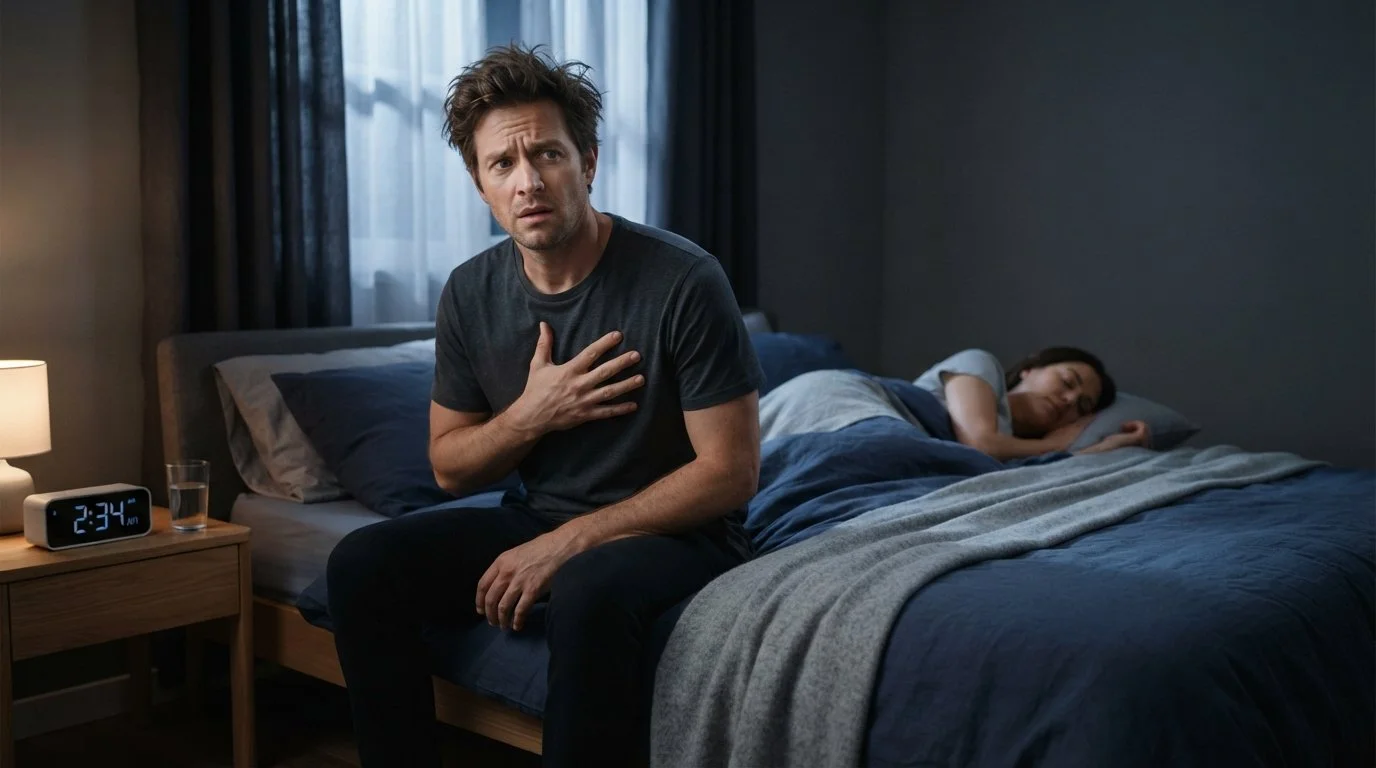
Yes, a panic attack can wake you from sleep. Known as nocturnal panic, the experience may involve sudden fear and frightening physical sensations, even without a remembered nightmare.
However, waking with a racing heart or difficulty breathing does not establish that panic caused it. This guide explains nighttime panic, overlapping sleep conditions, when medical assessment is needed, and options for ongoing support at Wellman Psychology in Chicago.
What Is a Nocturnal Panic Attack?
According to Cleveland Clinic, a nocturnal panic attack awakens someone in a state of panic, aware of the fear and physical symptoms. Returning to sleep may be difficult afterward.
Common Nighttime Panic Symptoms
The experience may include:
A racing or pounding heart.
Sweating, trembling, or chills.
Breathlessness or a choking sensation.
Nausea, tingling, or intense dread.
The most intense sensations may peak quickly while worry or difficulty returning to sleep continues. That lingering distress does not necessarily mean the attack remains at peak intensity.
Panic During Sleep Versus Worry Before Bed
Lying awake worrying about tomorrow is different from being awakened by panic. Both can disrupt sleep and may occur together, but the distinction helps a clinician understand the pattern.
A nighttime episode does not automatically establish panic disorder. Assessment considers recurrence, ongoing concern, daily impact, and other possible explanations.
First, Consider Whether Symptoms Need Medical Attention
When to Call 911
Call 911 for severe chest pain or pressure, severe breathing difficulty, collapse, or sudden trouble speaking or weakness on one side. Do not assume these symptoms are panic because they happen at night or you have an anxiety diagnosis.
Do not delay help while trying a breathing exercise or waiting to see whether symptoms settle. Avoid driving yourself if you may be having a medical emergency, and follow the dispatcher’s instructions.
When New or Recurring Nighttime Symptoms Need Assessment
Arrange medical assessment for a first unexplained episode, symptoms that differ from previously assessed attacks, or recurring awakenings that disrupt sleep. Persistent symptoms also deserve attention.
There is no required waiting period before asking for help. If there are no emergency warning signs but you are unsure how urgently to seek care, contact your healthcare provider or a nurse advice line.
How Nocturnal Panic Differs From Other Nighttime Events
Several experiences can cause frightening awakenings. Awareness, recall, and partner observations can help guide assessment. No single feature in this comparison confirms a diagnosis.
Experience
What may be noticed
Useful information to share
Nocturnal panic
Waking aware of intense fear and physical symptoms
What you felt on waking and afterward
Nightmare
Awakening from a frightening dream
Any remembered dream content
Night terror
Screaming, movement, or apparent fear while not fully awake
A partner’s observations and later recall
Sleep paralysis
Temporary inability to move or speak while falling asleep or waking
Whether awareness was present during the immobility
Sleep apnea
Interrupted breathing, snoring, or gasping during sleep
Witnessed breathing pauses and daytime effects
Nightmares, Night Terrors, and Sleep Paralysis
Unlike panic arising from sleep, a nightmare involves frightening dream content. However, recall may be incomplete, and experiences can overlap.
During a night terror, someone may appear awake without being fully aware of what is happening. Sleep paralysis concerns temporary immobility around a sleep transition. These distinctions help organize the history rather than settle the diagnosis.
Sleep Apnea and Other Medical Explanations
The National Heart, Lung, and Blood Institute identifies breathing pauses, loud snoring, gasping, and daytime sleepiness as symptoms to discuss when assessing sleep apnea.
Waking frightened after a breathing interruption is not automatically the same as nocturnal panic. Anxiety and a sleep-related breathing condition can also coexist.
Other medical conditions, including asthma or thyroid problems, may produce overlapping symptoms. A clinician can consider the broader history and decide what evaluation is appropriate.
Why Might Panic Occur During Sleep?
Possible Contributors Without a Single Proven Cause
According to Mayo Clinic, the causes of nighttime panic are not fully understood. Genetics, stress, and differences in how the brain processes fear may contribute, but they do not explain every individual episode.
A clinician may explore your sleep pattern, daytime panic, current stress, medications, and substance use. These questions help build a picture rather than prove that one factor caused an awakening.
You do not need to assume that an episode reveals hidden trauma or a frightening thought you cannot remember. Identifying stress also does not rule out a medical condition.
What Non-REM Sleep Research Can Tell Us
Sleep research has described nocturnal panic arising during non-REM sleep, the stages outside rapid eye movement sleep.
Observing a sleep-stage association does not establish why an attack occurs or mean that a particular transition causes every episode. You cannot reliably identify your sleep stage from the time on the clock or how an awakening feels.
These findings provide clinical context rather than a reason to monitor every overnight change.
What to Do After Waking With Familiar Panic Symptoms
For symptoms that match episodes you have previously had assessed, follow your agreed care plan. Use the medical guidance above when the experience is new, different, or concerning.
Safe Positioning and One Optional Coping Tool
Pause before getting out of bed, especially if you feel dizzy. Find a comfortable, supported position and orient yourself to the room.
Choose one manageable option:
Gentle breathing: Allow a comfortable breath in and an unforced breath out. Avoid repeatedly trying to fill your lungs, compulsory breath holds, and paper-bag breathing.
External grounding: Notice three objects nearby, feel the bedding beneath your hands, or listen for an ordinary sound.
Stop an exercise if it increases discomfort. You do not need to force yourself to feel calm or fall asleep immediately. Avoid taking extra medication or unprescribed sedatives to end the episode.
How a Partner Can Help
A partner can use short, steady sentences and ask, “Would you like quiet company or help with your usual plan?”
Ask permission before touching or guiding the person. Avoid insisting on breathing exercises or repeatedly checking whether they feel better. Seek medical help when indicated rather than continuing coping prompts.
What to Expect From an Assessment
Useful Symptom History and Partner Observations
A clinician will ask about the awakenings and their effect on sleep and daytime functioning. Prepare a brief account of:
What you noticed first and what happened afterward.
How often episodes occur and whether they are changing.
Any dream recall, snoring, gasping, or witnessed breathing pauses.
Daytime panic, bedtime worry, sleepiness, or difficulty concentrating.
Relevant health conditions, previous assessments, medications, caffeine, alcohol, and other substances.
With your permission, a partner’s observations may help clarify events you do not remember. You do not need continuous recordings or repeated pulse checks.
When Medical Tests or a Sleep Study May Be Appropriate
Your clinician may recommend an examination, selected tests, or referral to sleep medicine based on the findings. A sleep study may be appropriate when a sleep-related breathing problem or another sleep disorder is suspected.
Not everyone needs the same investigations. Consumer sleep trackers cannot independently confirm nocturnal panic or exclude a sleep disorder. Ask what each recommended assessment would clarify and how it could affect treatment.
Treatment for Recurring Nighttime Panic and Sleep Disruption
Treatment depends on what the assessment identifies. Panic, insomnia, sleep apnea, or another condition may require different approaches, and more than one concern can be present.
CBT for Panic and Fear of Going to Sleep
Cognitive behavioral therapy, or CBT, can address frightening interpretations of bodily sensations, fear of another episode, and avoidance around bedtime.
For example, someone may delay going to bed because they worry that falling asleep means losing control. A therapist can help examine that fear and develop manageable steps toward a less restricted routine.
When appropriate, treatment may include clinician-guided exposure. Exercises should follow an assessed plan that accounts for your health needs rather than self-directed attempts to provoke symptoms.
Explore Wellman Psychology’s approach to cognitive behavioral therapy in Chicago.
Addressing Insomnia or a Coexisting Sleep Disorder
Panic-focused CBT differs from CBT for insomnia, or CBT-I, which specifically addresses persistent sleep difficulties. Ask whether a provider has training relevant to your concern.
If sleep apnea or another medical condition is identified, follow the recommended treatment and specialist advice. Anxiety therapy does not replace prescribed sleep-apnea care.
Goals and progress should be reviewed individually, without a fixed promise of uninterrupted sleep or recovery by a particular date.
Discuss Nighttime Anxiety With a Chicago Psychologist
Psychotherapy Options at Wellman Psychology
A Chicago psychologist can help you explore recurring panic, bedtime fear, and related distress alongside appropriate medical assessment. Wellman Psychology offers psychotherapy tailored to your concerns and goals.
For example, someone might find that fear of another nighttime episode leaves them exhausted during downtown work meetings. This hypothetical situation could guide a conversation about sleep-related worry and daily functioning.
Personalized Anxiety Treatment in Chicago
Ask about a clinician’s experience treating panic, whether insomnia requires a separate referral, and which appointment formats are available. You can also explore online therapy in Illinois.
Do not assume a psychotherapy appointment includes a sleep study or treatment for breathing disorders.
Schedule an Appointment
Schedule an appointment to discuss suitable psychological support. Routine booking is separate from emergency medical care.
Wellman Psychology
3660 North Lakeshore Drive, The New York Building, Suite 201
Chicago, IL 60613
Phone: 773-759-5126
Hours by appointment only. Office details
Frequently Asked Questions
Can Nocturnal Panic Happen Without Daytime Panic Attacks?
Yes. A history of daytime attacks is not required, although this pattern alone does not establish the cause of the awakenings.
Does Waking Up Gasping Mean It Was a Panic Attack?
No. Gasping is not specific to panic. Discuss unexplained episodes with a medical professional and follow the emergency guidance above for severe breathing difficulty.
Does Not Remembering a Nightmare Prove Nocturnal Panic?
No. Dream recall varies. The absence of a remembered nightmare cannot identify the cause.
Will Better Sleep Habits Stop the Attacks?
Sleep routines may support care, but they cannot guarantee that attacks will stop. Continuing difficulties do not mean you have failed to follow the right routine; targeted treatment may be needed.